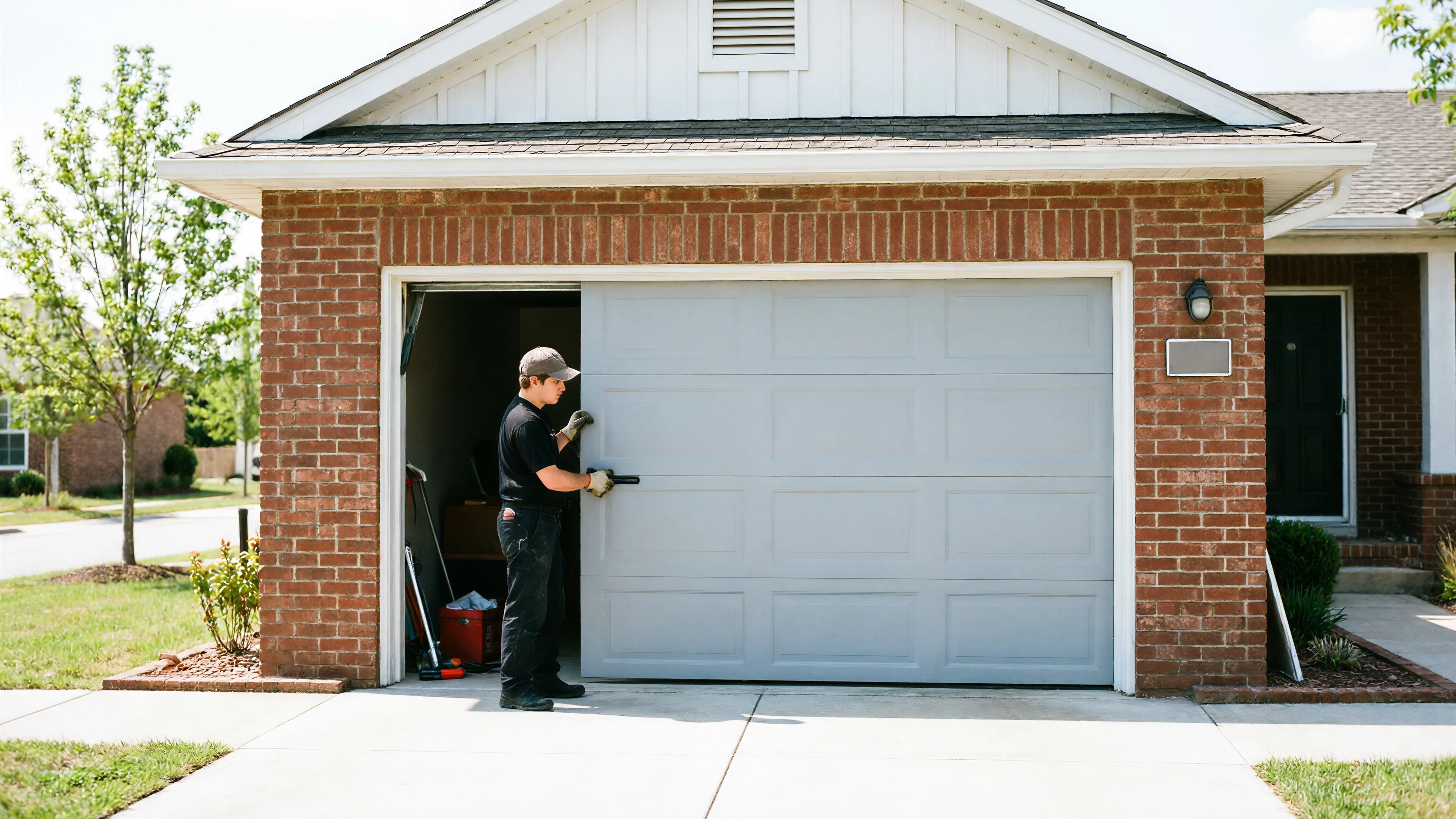
Doing It Yourself
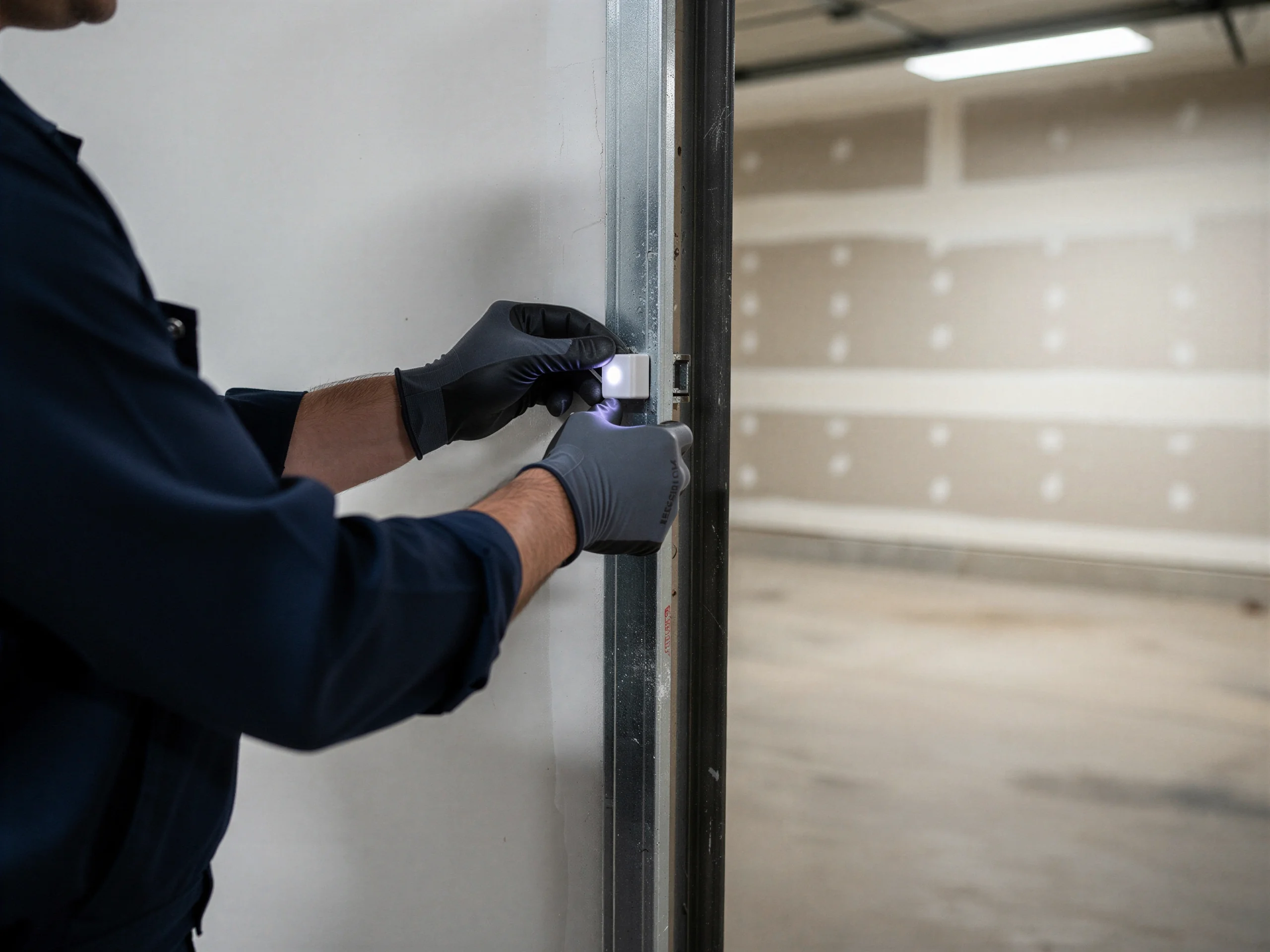
Before you call anyone, check the easy stuff. Swap the remote battery. Wipe dust off the two safety sensors near the floor on each side of the track and make sure neither one has been bumped out of line - a blinking light on the opener head is almost always this.
Loose wall button wiring
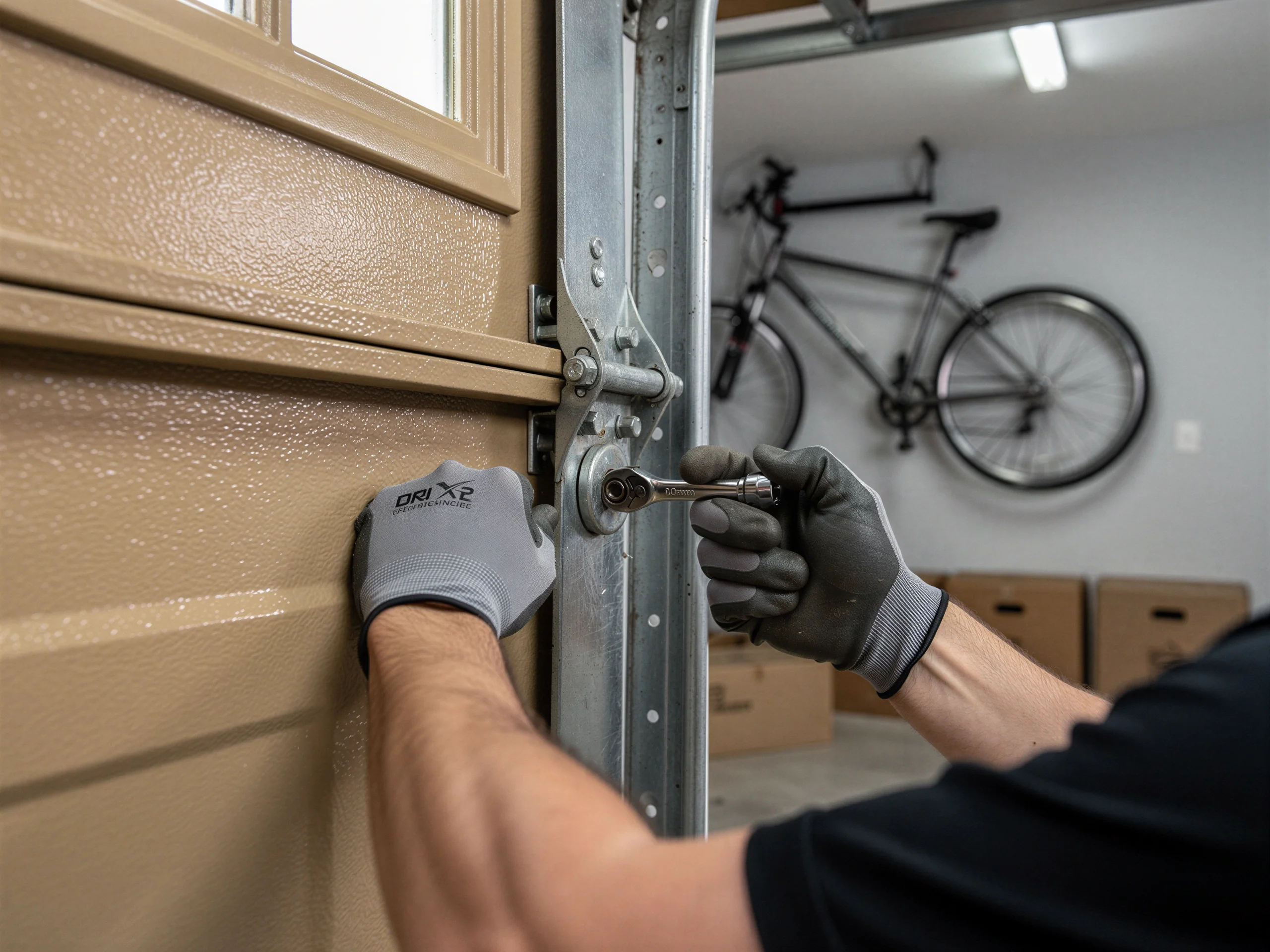
Check the wall button wiring where it enters the unit; it works loose over time. If the door reverses right after touching the floor, the down-force dial on the opener is probably set wrong, and that's a five-minute adjustment with the manual.
Down-force dial adjustment
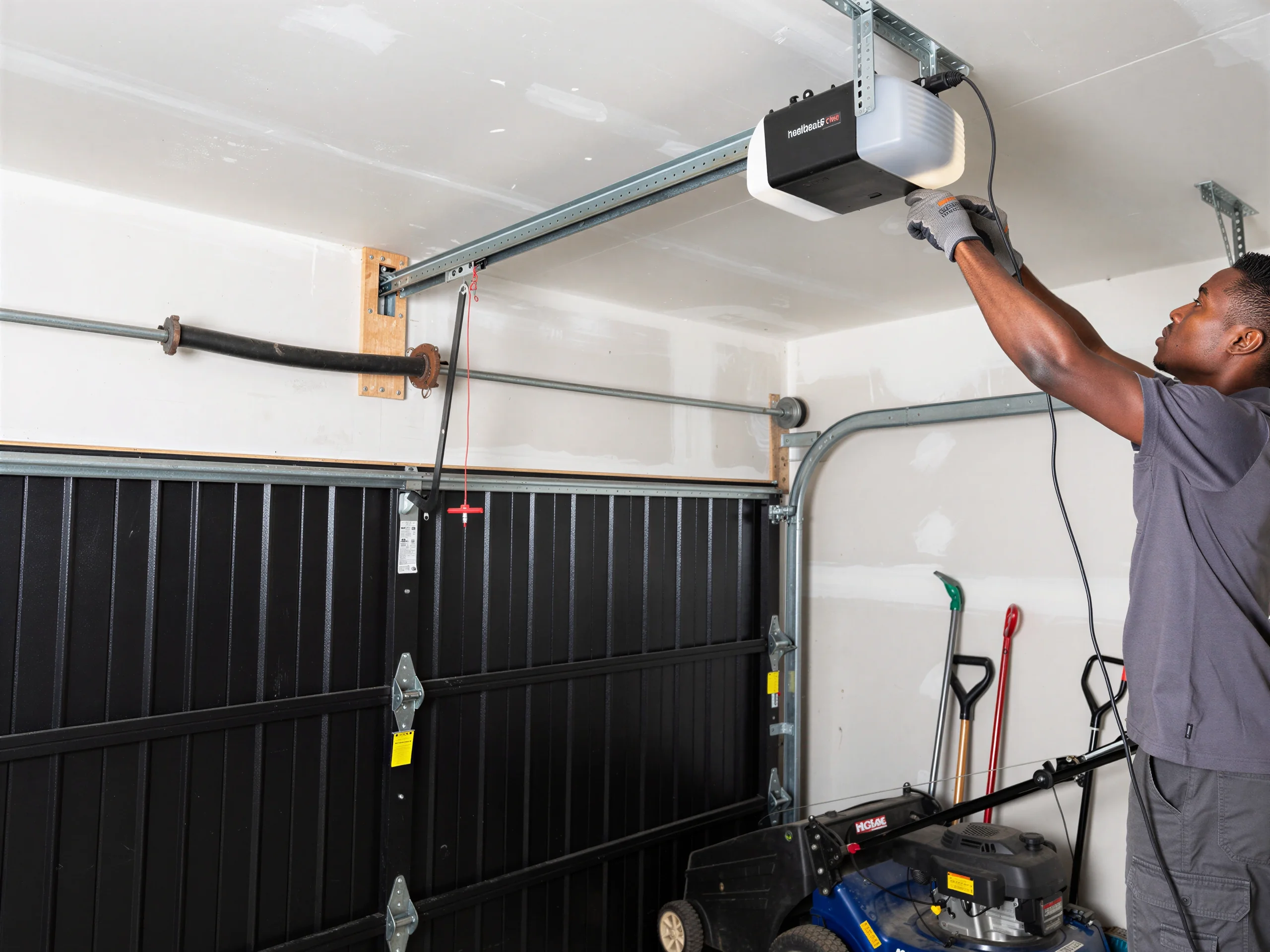
What you shouldn't touch: the circuit board, the capacitor, or anything involving the trolley chain or belt under tension. If the motor hums and doesn't move the door, or the logic board shows a fault code you can't clear by unplugging it for thirty seconds, stop there.
DIY wiring costs more
We'd rather you call with a simple problem unsolved than call us after a board gets fried from a wiring mistake. Opener boards aren't cheap, and a bad DIY fix usually costs more to undo than the original call would have.
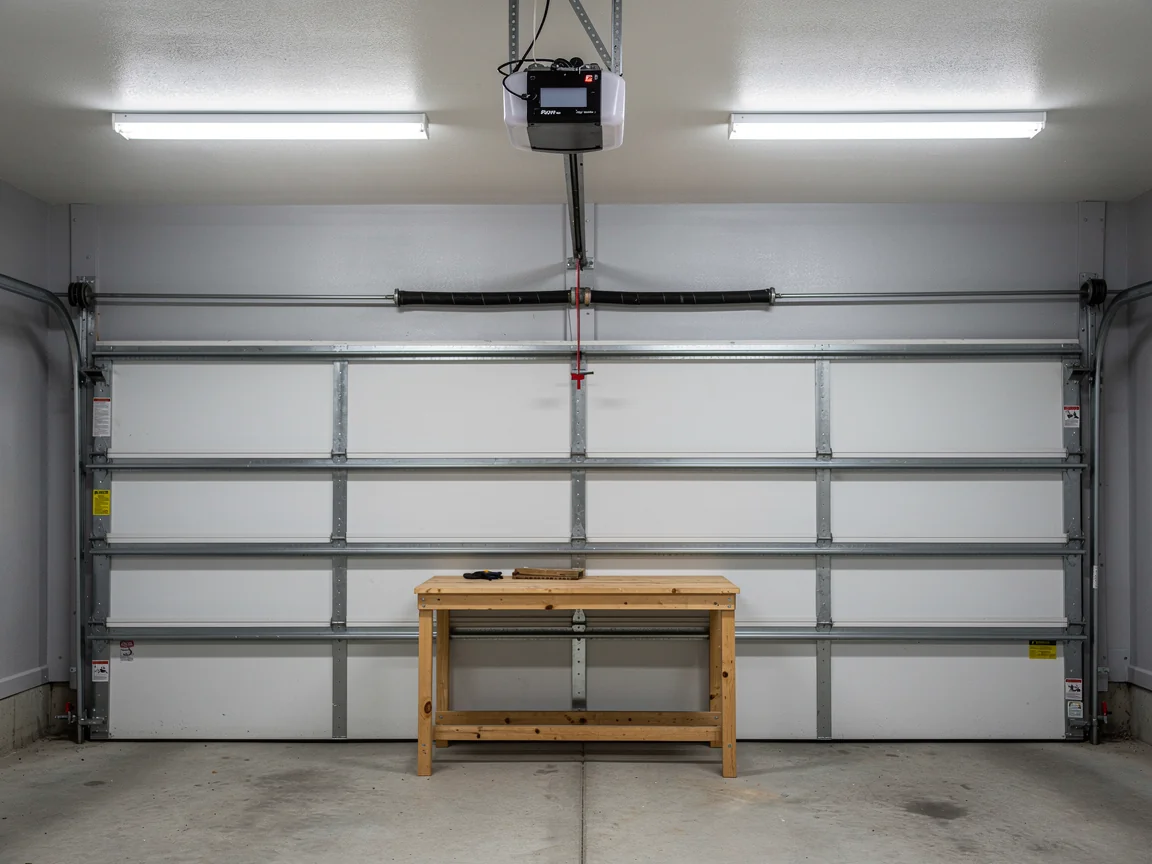
How to Book
We run out of Boerne, about 19 miles from Hollywood Park, so we schedule the opener call ahead of time rather than rolling trucks on a guess. Tell us the opener brand if you can read it off the motor housing, what it's doing (or not doing), and roughly how old the unit is. That lets us load the right logic board, sensor pair, or drive gear before we leave the shop instead of diagnosing twice.
If you also need work on the door itself - springs, panels, track - that's covered on our Hollywood Park garage door page. For the full rundown on how opener jobs are priced and handled out of our Boerne location, see garage door opener repair in Boerne.
The Symptom
The call we get most from this part of the service area is an opener that still runs the motor but won't actually lift the door, or one that reverses a few inches off the floor every single time.
Replacement units already used
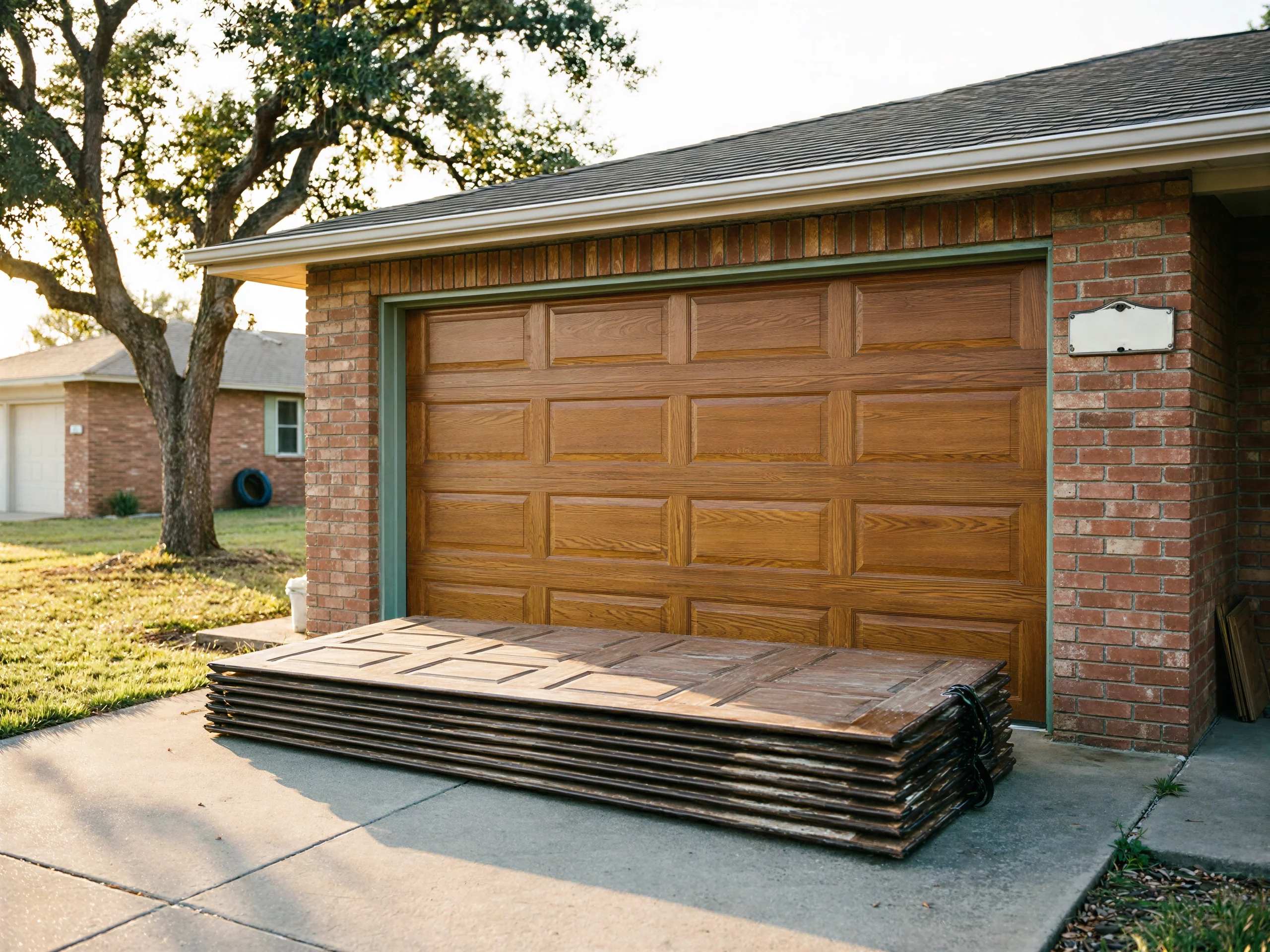
Houses here were mostly built around 1972, which puts the original garage openers well past any reasonable service life, and most have already been through at least one full replacement unit since then - sometimes two. What we're usually looking at isn't a brand-new problem.
Second-generation wear points
It's a second-generation opener, installed sometime in the 90s or 2000s, now hitting the same wear points the first one did: stripped drive gear, a capacitor that's given out, or a logic board that's taken enough years of garage heat to finally fail.
Remote range fading
Remote range dropping off, or a remote that used to work from the street and now only works from a few feet away, is the other common one. On older openers without rolling code, that's usually a worn-out receiver rather than anything in your car.
What Is on the Truck
Because opener ages here skew toward units installed as replacements rather than originals, the truck carries parts for both chain-drive and belt-drive systems - drive gears and sprockets for the older chain units, and logic boards and capacitors that cover the handful of opener brands most common in homes this age. We also stock replacement safety sensor pairs, since those get knocked loose or corrode at the wire connection more than people expect.
We don't stock every opener model on the market, and for less common brands or openers under ten years old with proprietary boards, we sometimes order the part rather than carry it. We'll tell you up front if that's the case rather than quote a same-visit fix we can't actually do.
Why It Happens Here
Hollywood Park's housing sits on the older end of the build range for this area - the broader service territory runs 1972 through 2005 with a median closer to 1997, but homes out here were mostly up by 1972.
Openers replaced several times
That matters for openers specifically because garage opener hardware doesn't last as long as the house does. A home from 1972 has likely cycled through two or three openers by now, and each replacement was installed into the same garage wiring, the same header clearance, and sometimes the same mounting bracket as the last one - which means old mounting hardware paired with a newer motor isn't unusual.
Heat stress in garages
The climate here is mild with occasional freeze risk rather than hard winters, so we don't see the ice-jammed track failures some regions deal with. What we do see is heat stress on circuit boards and capacitors from garages that sit closed and hot most of the day, which shortens the working life of the electronics faster than the mechanical parts around them.
What Can Go Wrong
The most common opener failure out here is a stripped drive gear - the small plastic gear inside the motor housing that does the actual work of turning the chain or belt sprocket. It wears out from age, not abuse, and once it strips, the motor will run but the door won't move. Second most common is a dead capacitor, which shows up as a motor that hums but won't start the lift cycle.
Safety sensor failure is usually wiring corrosion at the connector rather than the sensor eye itself. And on the oldest units still running out here, we sometimes find logic boards that have taken enough heat cycles over the years that they fail intermittently - working fine one day, dead the next - which makes them the hardest of the bunch to diagnose over the phone. If a board's failing intermittently and the opener is already old, we'll usually tell you straight that replacement makes more sense than another board swap.
Talk to a local pro
Garage door service in Boerne?
Same-day service with honest, upfront quotes.