What Can Go Wrong
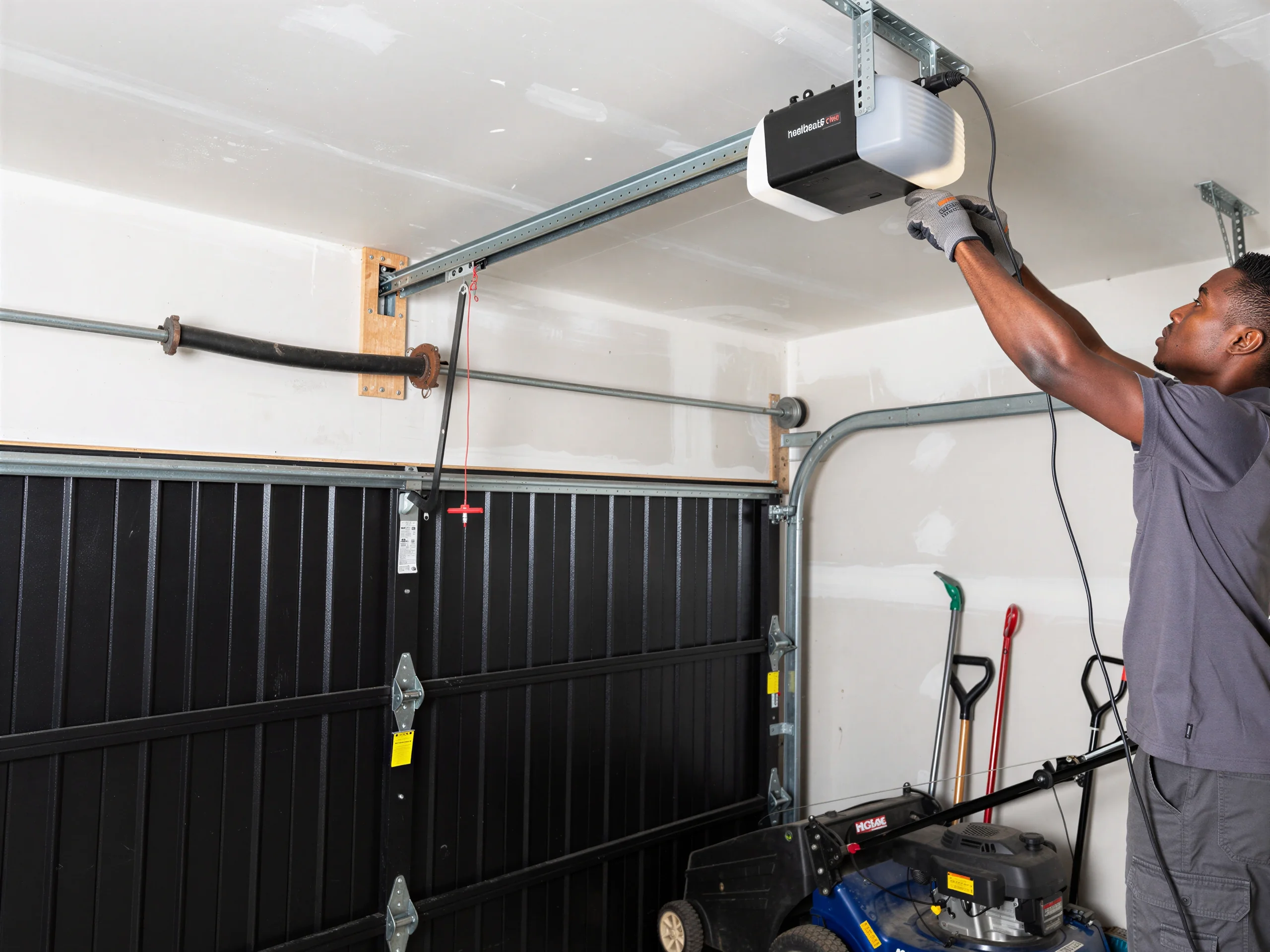
An opener is a motor, a logic board, a set of safety sensors, and a drive system working together, and any one of those can fail on its own.
Stripped gear, memory loss
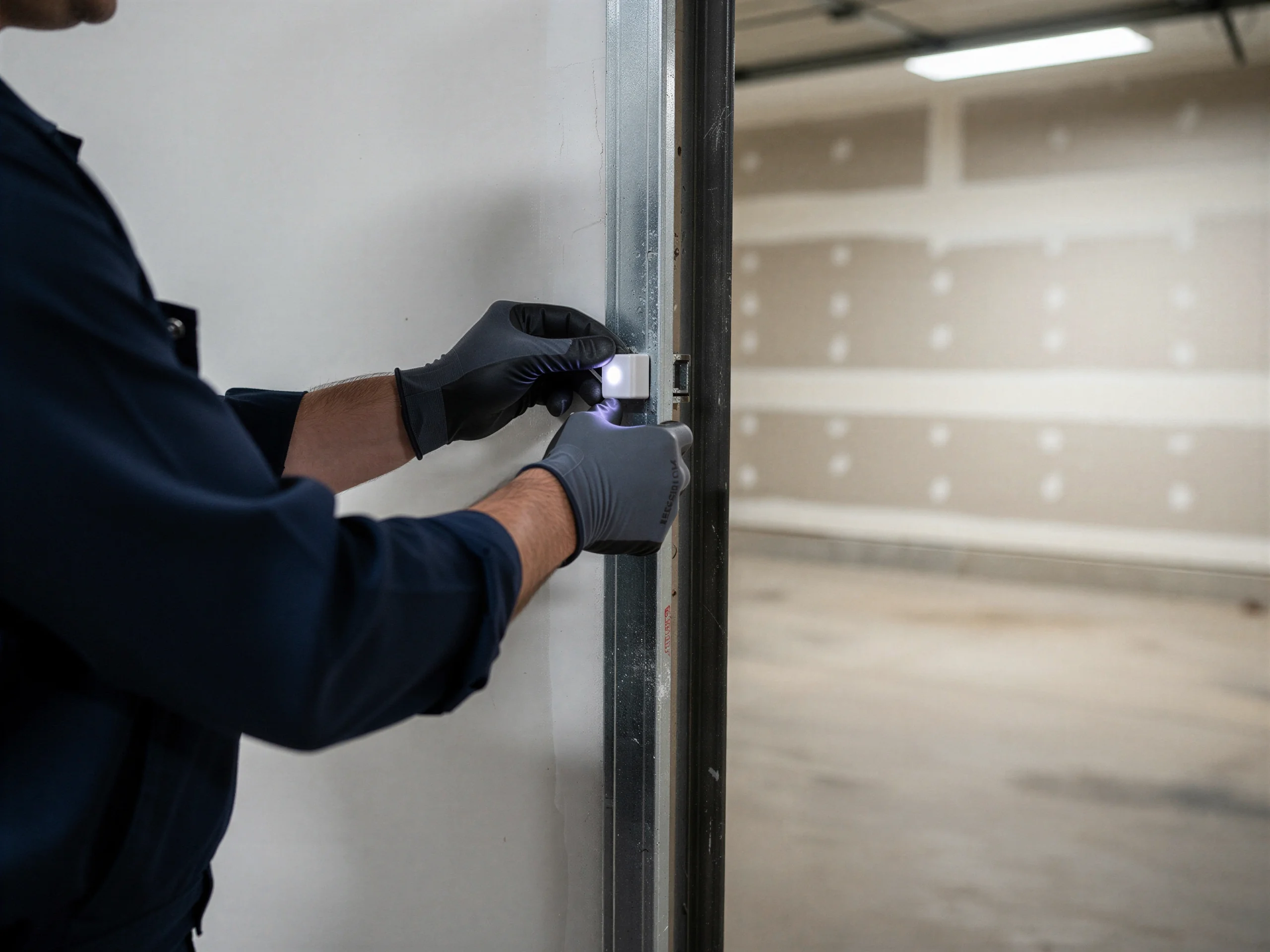
The motor can run but not move the door if the drive gear has stripped. The logic board can lose its memory of the remote codes after a power blip. The photo-eye sensors near the bottom of the track can go out of alignment and stop the door from closing at all, even though nothing looks wrong. The travel limits can drift so the door reverses before it's fully down, or keeps grinding after it should have stopped.
Original or first-replacement units
Most of the service area went up between 1972 and 2005, with a lot of that stock clustering around the late 1980s and 1990s. Openers from that build window are often original units or a first replacement bought sometime in the 2000s, which puts a lot of them well past the point where parts are easy to source.
Worn sprockets and capacitors
We see chain-drive units with worn sprockets, capacitors that have dried out, and circuit boards with relay contacts that have pitted from years of cycling. A board that's failing intermittently is a different job than a board that's failed completely, and the fix is different each time.
The Symptom
The door doesn't move when you press the remote, but the light comes on. The door moves partway and reverses for no reason you can see.
Trolley stuck, motor runs
The opener makes the running sound but the trolley doesn't travel, which usually means a stripped gear inside the housing rather than anything wrong with the door itself.
Cold-morning double reversal
Sometimes it's quieter than that: the door closes fine most days, then on a cold morning it reverses twice before it'll stay shut, and by afternoon it behaves normally again.
Temperature-sensitive sensor
That last pattern points at a sensor or a board responding to temperature, not a door problem, and it's worth describing to whoever answers the phone so the right parts come on the truck. A call that starts with 'opener won't close in the morning' gets diagnosed faster than one that starts with 'garage door is broken.'
Doing It Yourself
Wipe the photo-eye lenses with a soft cloth and check that both sensors' indicator lights are solid, not blinking - that's free and takes two minutes. Check that the antenna wire hanging from the unit hasn't gotten tangled or cut. Beyond that, we'd rather you call than open the housing. The circuit board sits close to the motor capacitor, and the travel-limit adjustment is easy to get wrong in a way that makes the door slam the floor instead of stopping short of it. If the opener is original to a house built in the 1980s or 1990s, the parts to fix a stripped gear or a dead board usually aren't available separately anymore, and at that point a repair attempt just delays a replacement you were going to need anyway. We'll tell you straight when that's the case instead of billing for a part that won't hold.
Why It Happens Here
Boerne sits in a mild climate with occasional freezes, which isn't the kind of brutal swing that kills openers outright, but it's enough to matter. A unit that sits at 95 degrees in a closed garage all afternoon and then drops near freezing overnight is cycling through a temperature range every day that a board and its solder joints weren't built to handle forever. Over fifteen or twenty years, that daily swing is part of why boards and capacitors in homes from this era fail before the motor itself does.
Combine that with housing built mostly between 1972 and 2005 - median year 1997 - and you've got a lot of openers reaching the back half of their service life around the same time. A first-generation opener installed when a 1990s-built house was new is now old enough that replacement parts are scarce, and a homeowner calling about a dead opener today is often dealing with the original unit, not a second or third replacement.
Talk to a local pro
Garage door service in Boerne?
Same-day service with honest, upfront quotes.