What Can Go Wrong
Most of the openers we pull out in this area are original chain-drive units or a first-generation replacement, because the housing stock across this service area went up between 1972 and 2005, with the median build landing around 1997.
Gear and board failures
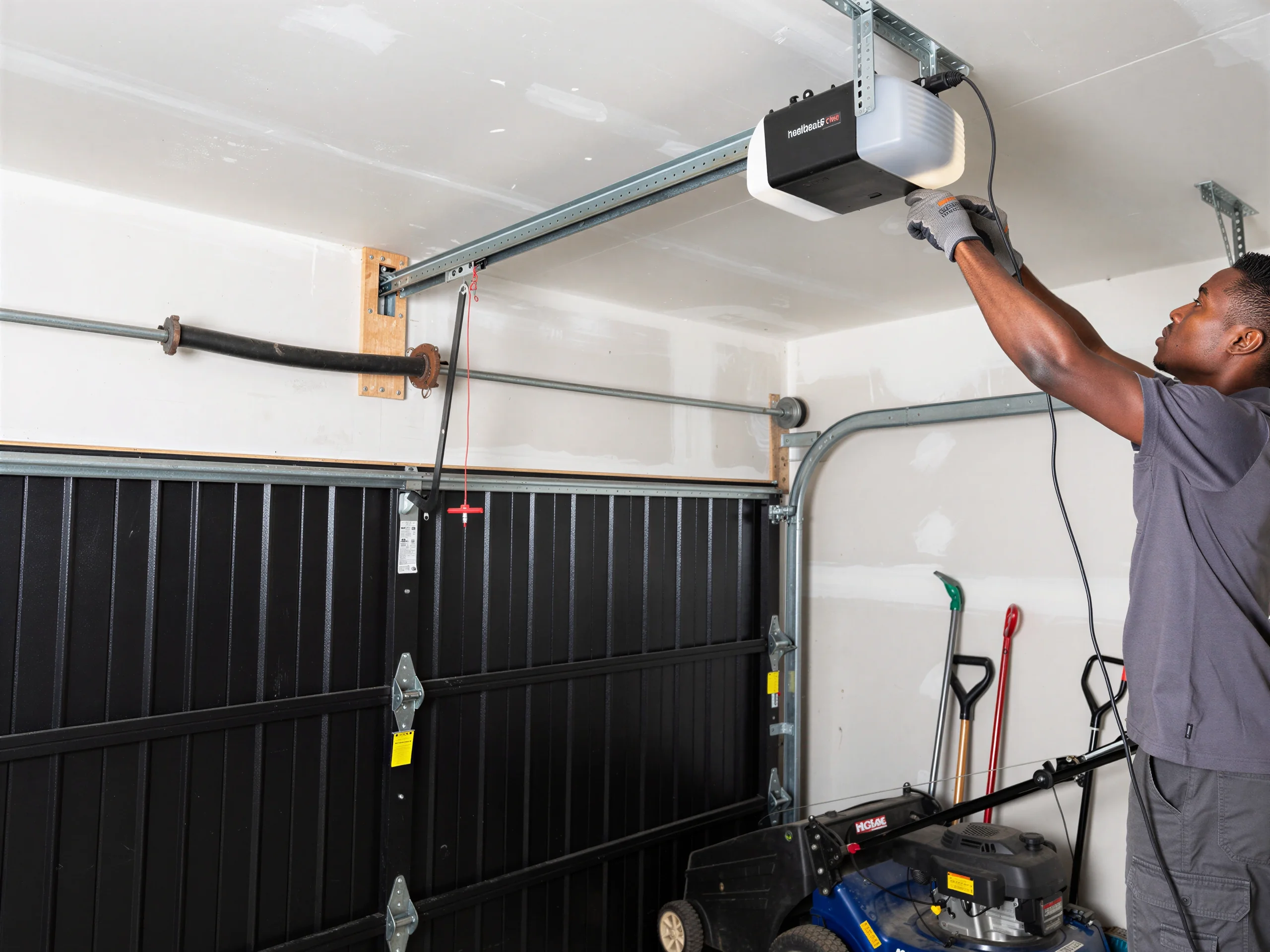
That age bracket means two common failure points: the drive gear, a small nylon part that strips teeth after twenty-plus years of use, and the logic board, which on pre-2010 units often lacks rolling-code security or battery backup. Neither failure is dangerous by itself, but both leave a door that won't open or close on command, and on a double door that's a full stop for the day.
Pre-safety-reversal openers
We also see openers original to houses in the 1980s and 90s pockets common across the eight named subdivisions in this area - bracket-and-rail setups that predate current safety-reversal standards and need a full swap, not a patch, if the opener itself is dead.
Repair versus new opener
We don't try to revive a cracked gear with grease or a logic board with a reset if the unit is past its service life; past a certain point, a new opener costs less over five years than chasing parts for a discontinued model.
The Symptom
The giveaway is usually a door that reverses halfway up, or an opener that runs but the door doesn't move - the clutch or gear slipping inside the housing.
Clicking before belt catches
Some owners hear a grinding or clicking sound before the belt or chain catches again, which tells you the gear is close to stripped rather than already gone.
Remote fails, wall works
A unit that opens fine but won't close on remote, only on the wall button, usually points to a dying logic board rather than anything mechanical, and that's a straight opener swap, not a sensor fix.
Original opener giving out
If your door was original to a house built in the 1980s or 90s, which describes a lot of stock in this service area, an opener that's struggling now is likely original equipment finally giving out after three decades of daily cycles. That's not a judgment on the brand - it's just the math of a 30-year-old motor.
Doing It Yourself
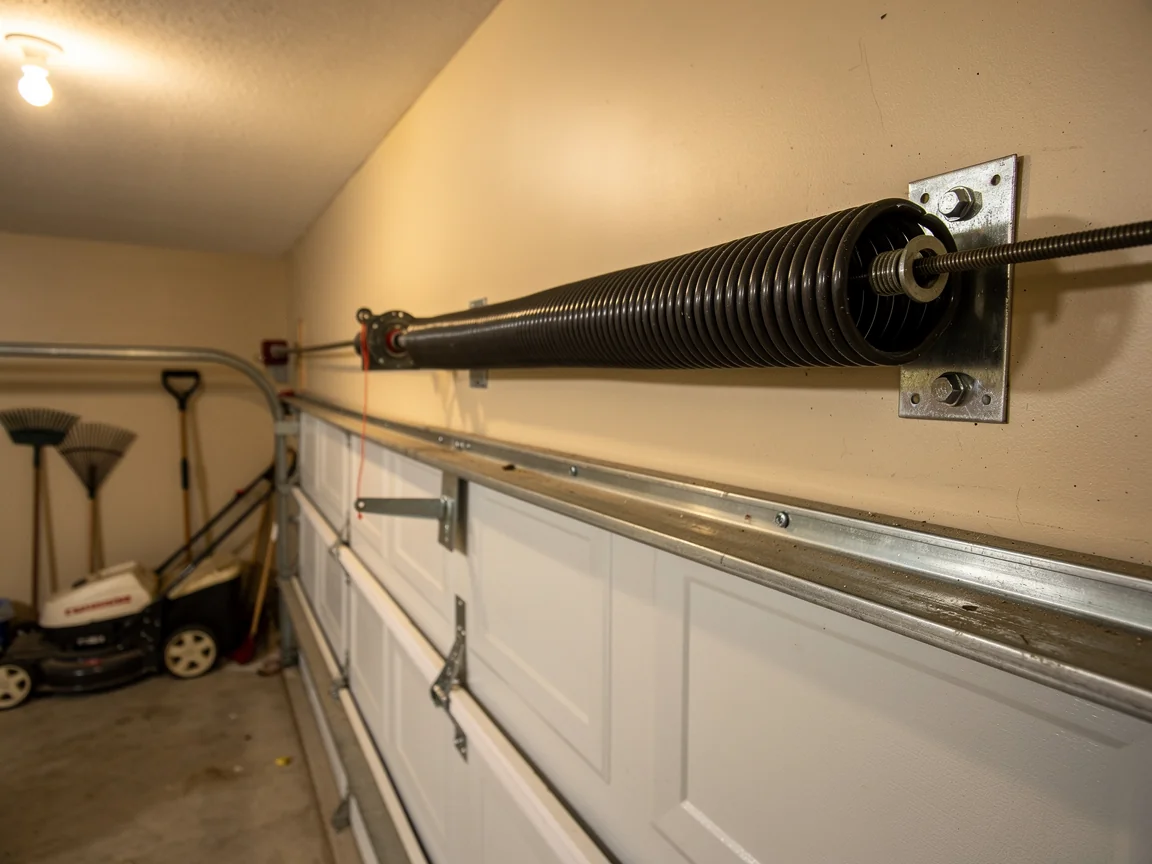
Swapping a wall-mounted opener bracket or reprogramming a remote is within reach for most owners with basic tools and a free Saturday. Replacing the opener unit itself is a different job: it means working overhead with a loaded torsion spring system a few feet away, running new wiring to the wall station, and setting travel limits and force sensitivity correctly so the safety reversal actually works - skip that step and you've installed a door that can close on something without stopping. If your garage ceiling has an attic above it, as a lot of homes in this area do, running the opener's power and photo-eye wiring cleanly through that space takes more time than the install itself. We'll say plainly: a belt-drive opener upgrade with battery backup is not a weekend project to save money on labor if you've never set limit switches before.
Why It Happens Here
This service area sits in a mild climate band that still sees occasional freezes, and that swing matters more to opener parts than steady heat or steady cold would. Nylon gears and belt material expand and contract across that range, and the repeated cycling is what cracks a gear tooth or stiffens a belt, not a single hard freeze. Because most homes here were built in that 1972-2005 window, a large share of openers are old enough that this slow freeze-thaw wear has caught up with them at roughly the same time. With median household income in this area at $135,120, and with owner-occupied homes outnumbering rentals by a wide margin across the roughly 16,300 households here, most of our opener calls come from owners replacing a tired unit proactively rather than waiting for a full lockout - upgrading to a belt-drive with battery backup so a short winter power blip doesn't leave the car stuck inside.
Talk to a local pro
Garage door service in Boerne?
Same-day service with honest, upfront quotes.