What Can Go Wrong
A garage door is a few hundred pounds of panel balanced on two springs and riding a pair of tracks, and every part of that system wears on a schedule.
Maintenance schedule lapsed
In Boerne's service area, where most houses went up between 1972 and 2005 with a median build year around 1997, that schedule has mostly run out. Torsion springs are rated for a set number of open-close cycles, and a door opened twice a day for twenty-plus years is near or past that number whether or not it's ever failed outright.
Dry rollers and seals
Rollers - especially the original nylon ones - dry out and crack. Lift cables fray at the drum. Weatherstripping along the bottom panel hardens and stops sealing. None of this shows up as a dead stop.
Gradual decline before failure
It shows up as a door that's slightly louder, slightly slower, or slightly less even than it used to be, right up until the day a spring snaps or a cable jumps the drum.
Hardware fails before motor
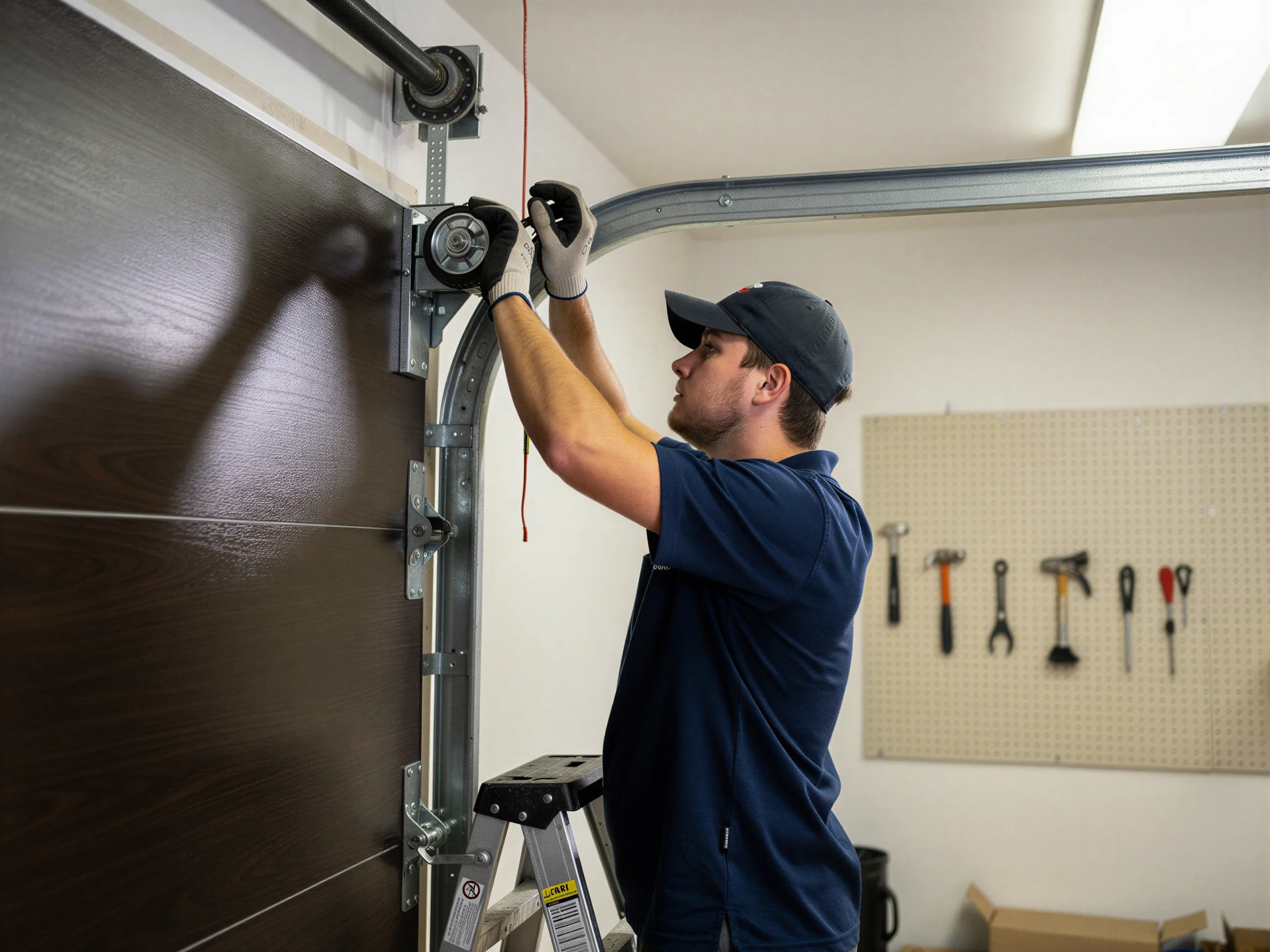
Across the eight established pockets of 1980s and 90s construction we see most often, the failure point is usually the spring or the roller track, not the opener itself - the motor tends to outlast the hardware it's pulling against. We don't push maintenance as a way to sell a new door. Most of the time a $20 part and twenty minutes of adjustment buys another several years.
The Symptom
You'll usually notice it before you can name it. The door hesitates for a half-second at the start of travel, or it closes slightly crooked, dropping faster on one side than the other.
Midpoint grinding from rollers
Sometimes it's noise - a grinding or popping as the door passes the midpoint of the track, which is usually a roller that's worn flat on one side rather than round.
Drifting travel limits
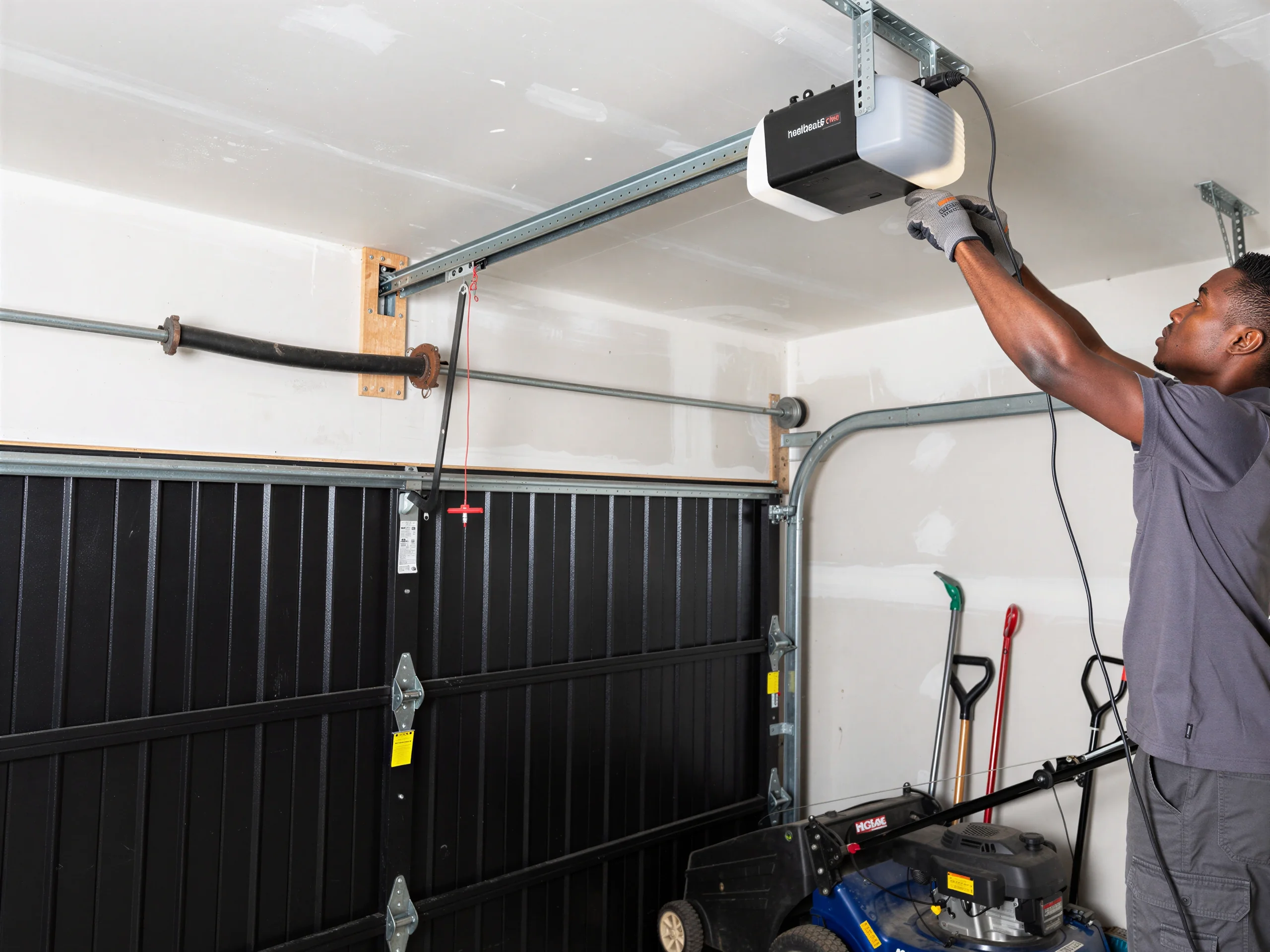
A door that reverses on its own partway down is often a sensor alignment issue, but on an older opener it can also mean the travel limits have drifted as the spring loses tension, which changes how hard the opener has to work to move the door. The symptom that matters most is a door that feels heavier than it used to when you lift it by hand with the opener disengaged.
Tension loss strains gears
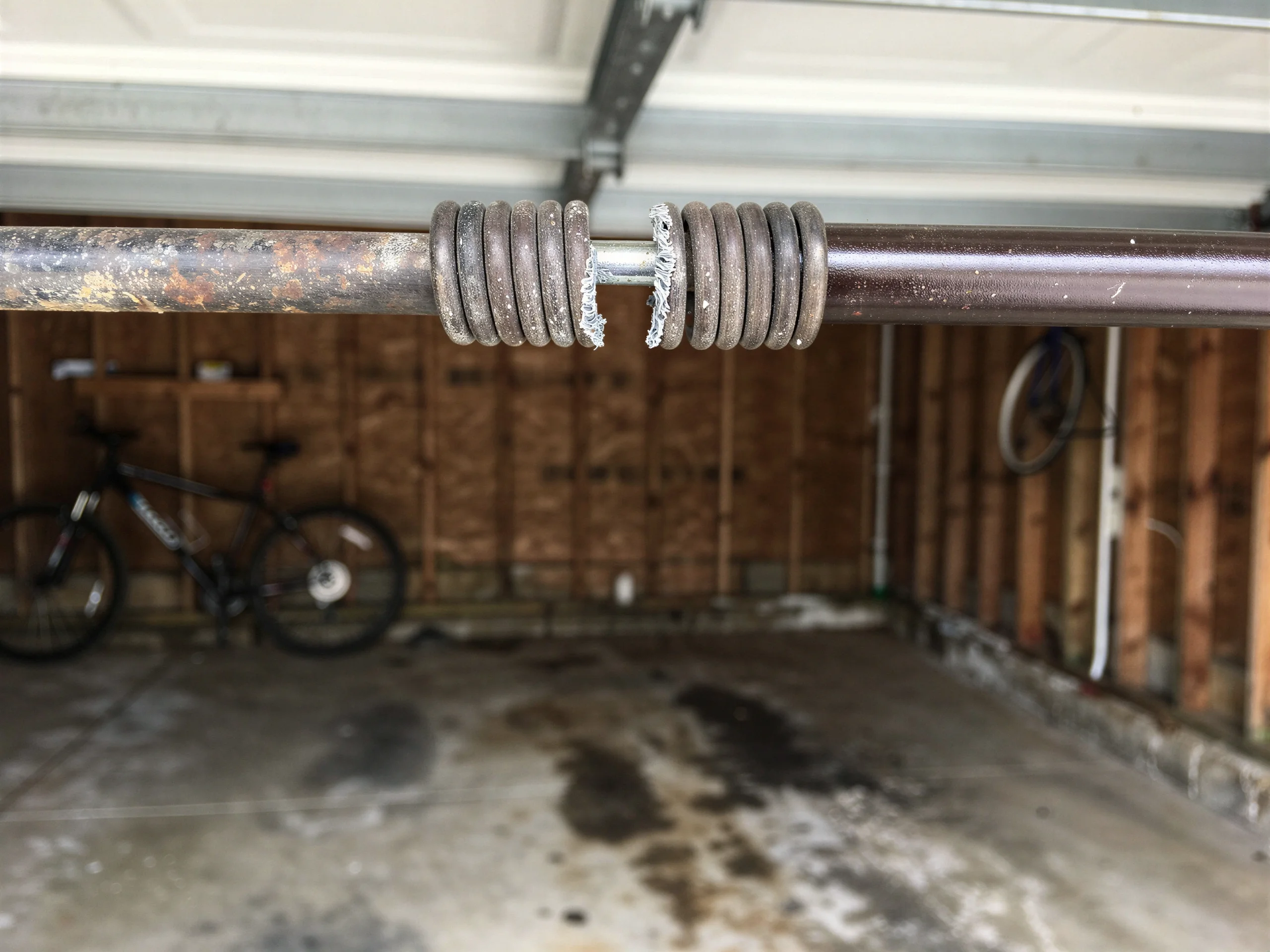
That's a spring losing tension, and it's not a wait-and-see item - a spring under reduced tension puts more load on the opener's drive gear and on the cables, and when it finally lets go, it tends to take something else with it. On a home with the original 1990s hardware, a heavier-than-normal door is the single clearest sign that the spring, not the opener, is the actual problem.
Doing It Yourself
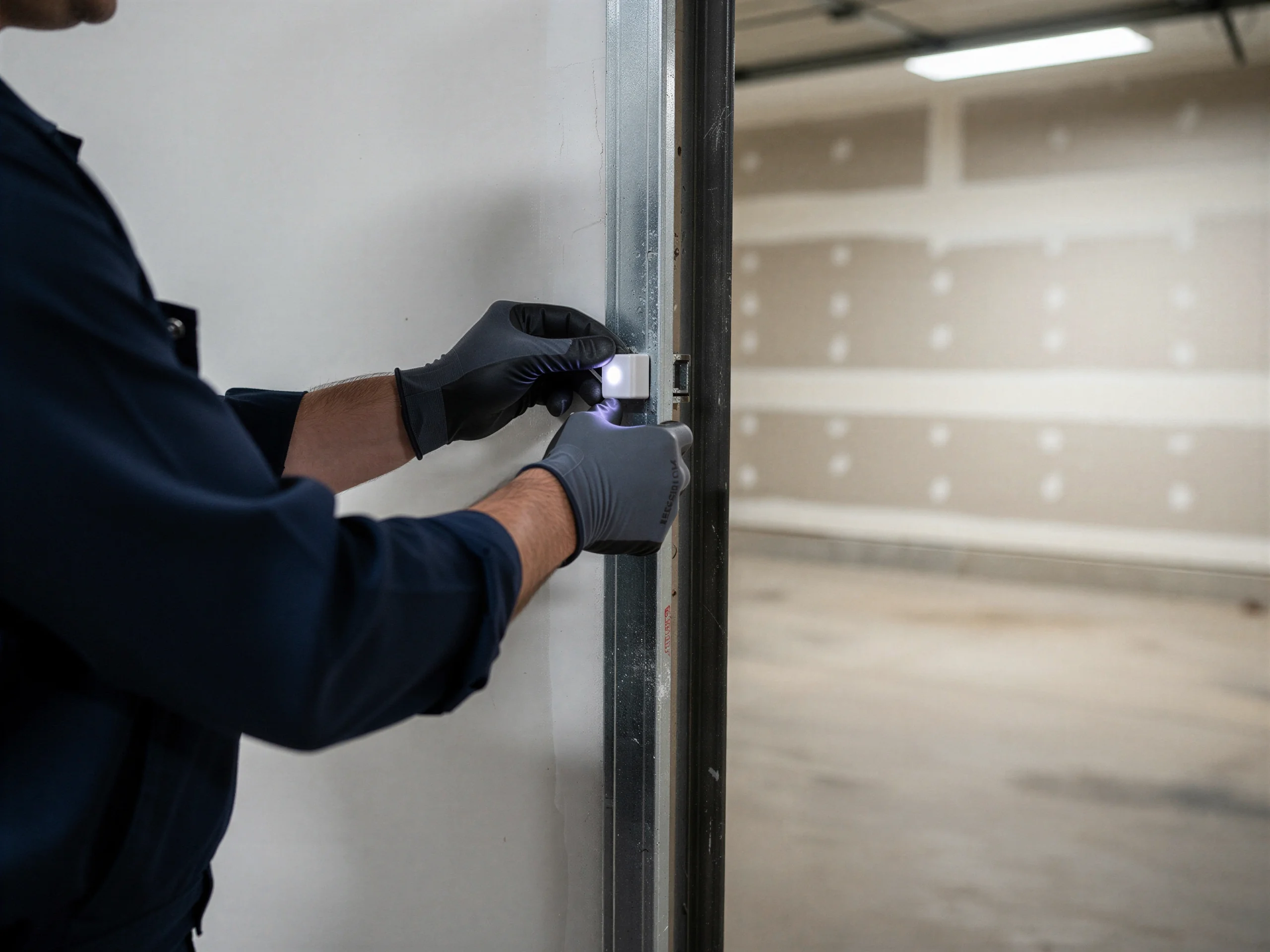
Some of this is genuinely fine to do yourself. Visually check the cables for fraying near the bottom bracket and the drum. Run a hand along the track for rust or debris buildup.
Silicone lube and bolts
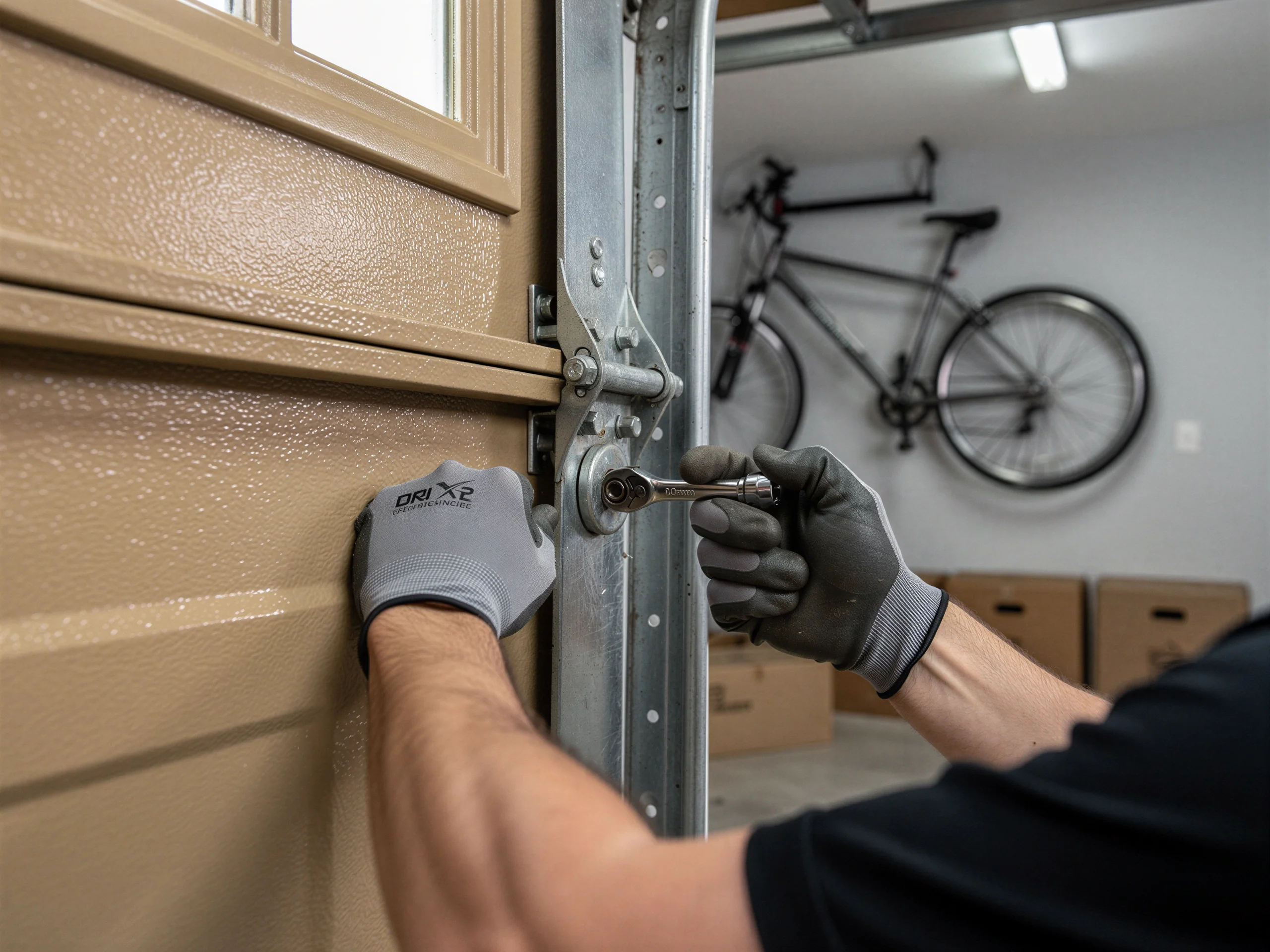
Spray a silicone-based lubricant - not grease, not WD-40 - on the rollers, hinges, and the spring itself once or twice a year. Tighten the bolts on the track brackets, which loosen over time with the vibration of daily use.
Bottom seal replacement
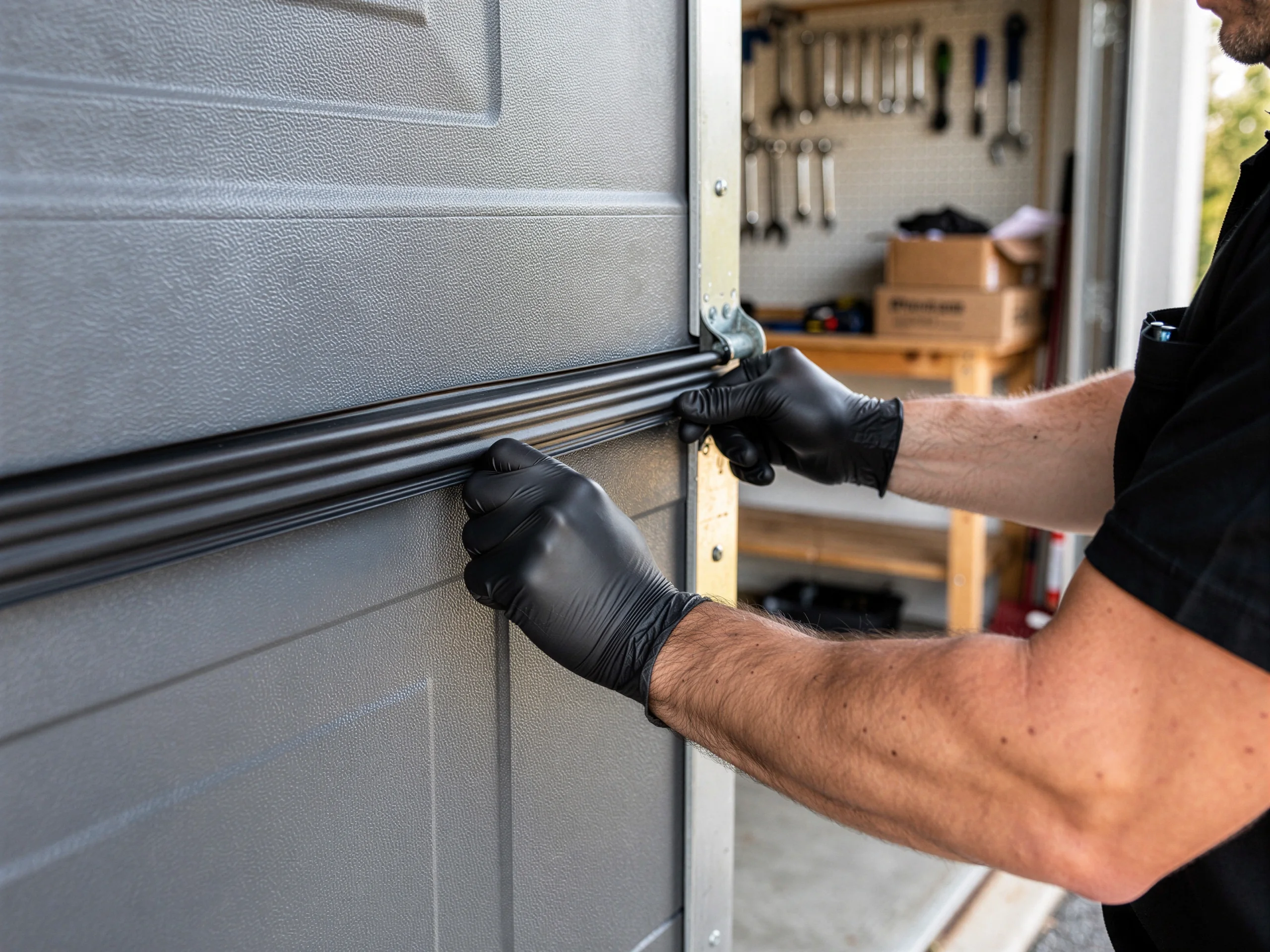
Check that the bottom seal still makes full contact with the slab; if light shows underneath in a few spots, it's time to replace it, and that's a cheap, simple swap. What isn't a DIY job is the spring itself.
Spring tension needs tools
A torsion spring is wound under enough tension to cause serious injury if it's handled wrong, and setting the correct tension for your door's weight takes a tool most homeowners don't own and shouldn't need to buy for a once-a-decade job. If you're not sure whether what you're looking at is a worn roller or a spring on its way out, that's the one call worth making before you start turning anything by hand.
Why It Happens Here
Boerne sits in a mild climate band with occasional freezes, which is easier on garage door hardware than a true hard-winter climate - you don't get the seal-cracking cold snaps that split vinyl weatherstripping overnight. But mild doesn't mean maintenance-free. The same dry, dusty stretches that make the climate comfortable also mean grit works into track channels and roller bearings without the seasonal rinse that wetter regions get, and lubricant that would stay fluid elsewhere here tends to gum up and attract more dust instead of less.
The bigger driver is simply age. With houses across the service area built mostly between 1972 and 2005 - a lot of it concentrated in 1980s and 90s construction across the eight main pockets of the area - a large share of doors are coming due for spring replacement and roller service at close to the same time, regardless of how well they were kept up. In a service area with over 16,000 households and roughly 15,000 owner-occupied houses, that adds up to a steady, predictable volume of the same handful of failures: tired springs, flattened rollers, and tracks that have drifted slightly out of alignment over two or three decades of settling.
Talk to a local pro
Garage door service in Boerne?
Same-day service with honest, upfront quotes.