What Can Go Wrong
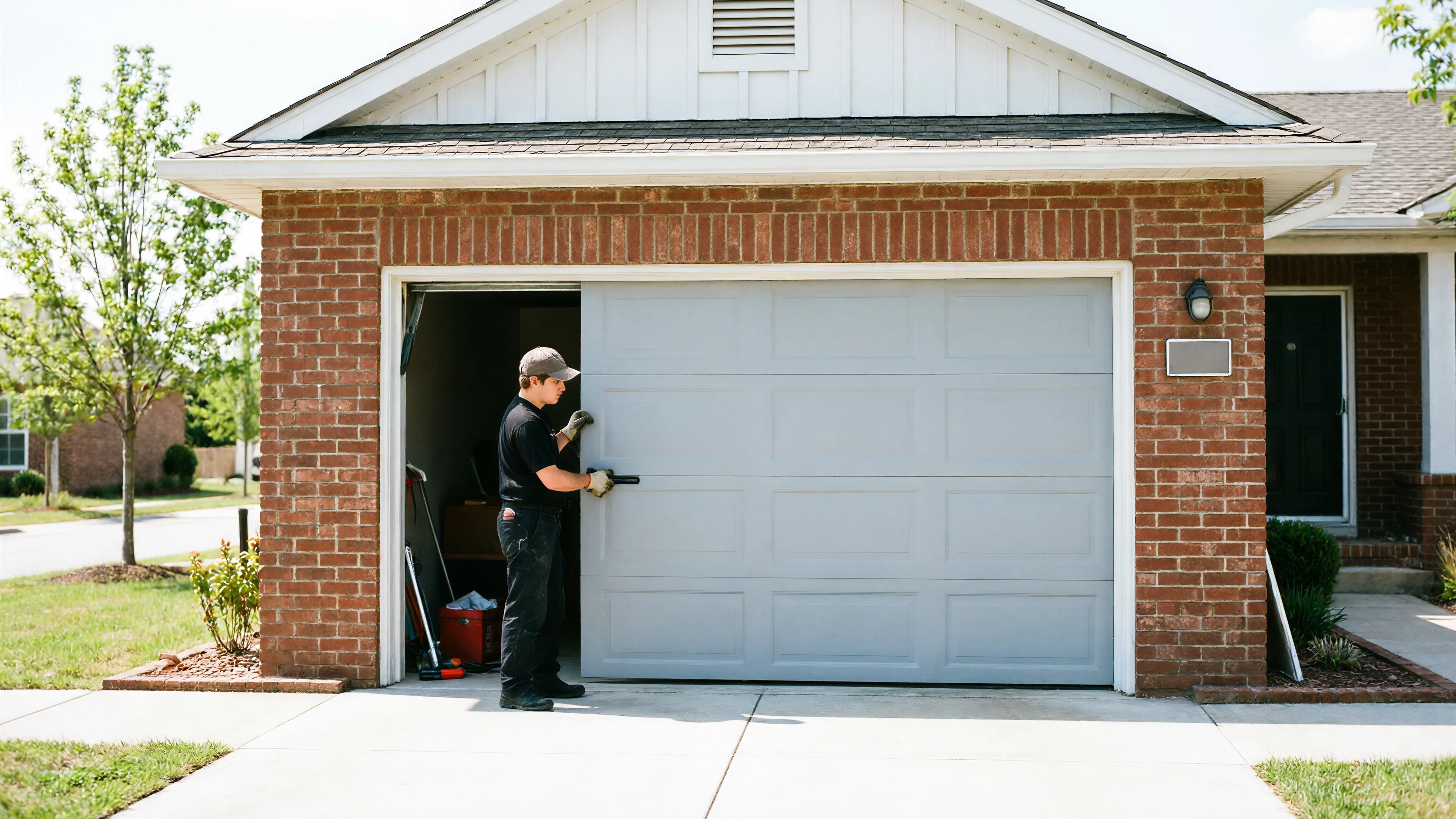
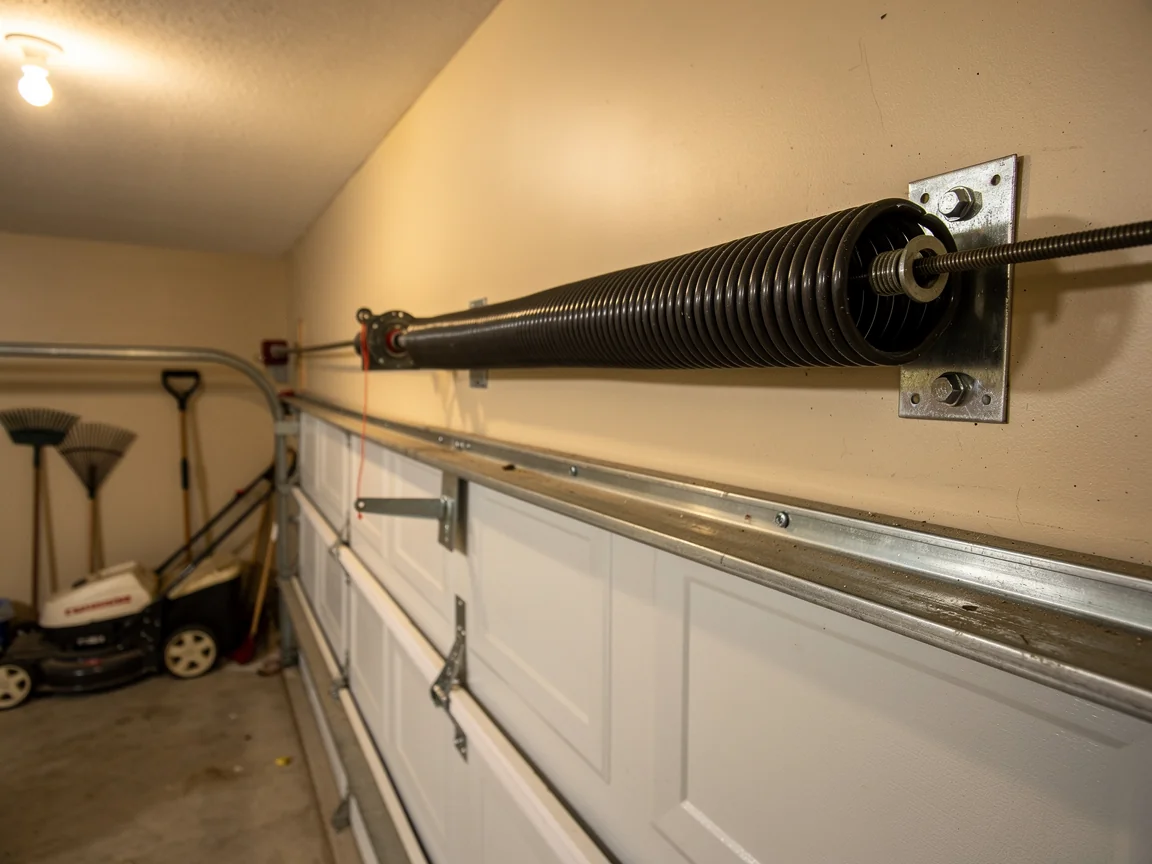
A garage door runs on either one or two torsion springs mounted above the opening, or a pair of extension springs along the horizontal tracks.
Spring carries the load
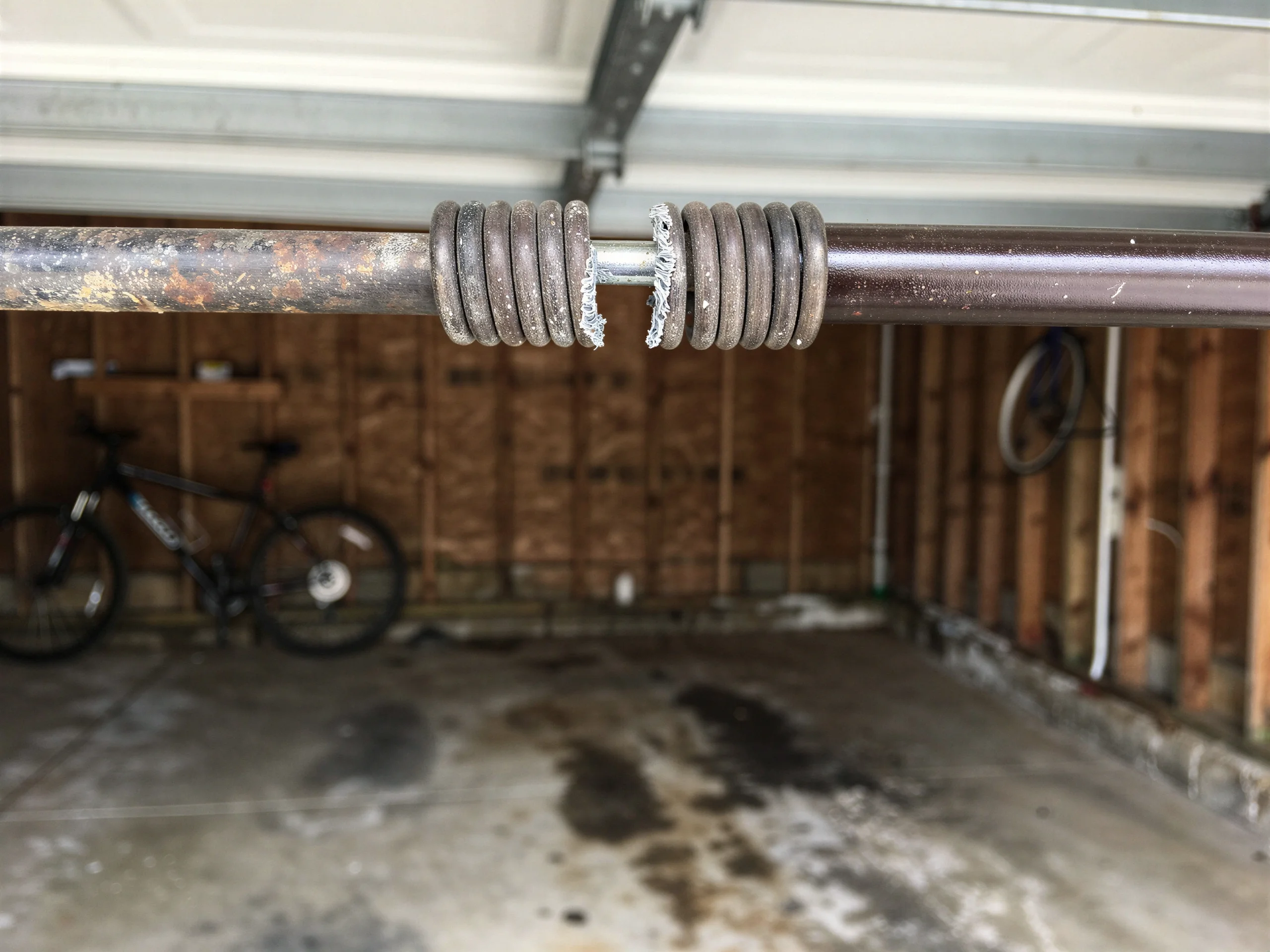
Either way, the spring is doing almost all the lifting work - the opener just guides the door up and down. When a torsion spring breaks, it usually goes with a loud bang, and the door becomes too heavy to lift by hand or by opener.
Extension springs sag
Extension springs tend to stretch and sag rather than snap clean, so the door starts closing crooked or dropping fast on the way down. Across the Boerne service area, most of the housing stock went up between 1972 and 2005, with a lot of it clustered in the 1980s and 90s across the eight named subdivisions in this part of the Hill Country.
Original torsion hardware aging
That means a large share of these doors are on their original torsion hardware, or a first replacement spring that's now reaching the end of its cycle life. Cables can fray at the same time a spring is going, since both parts age together.
Pop means spring, not opener
If you hear a single loud pop and the door won't budge, that's almost always the spring, not the opener motor. We don't replace an opener when the real problem is a worn-out spring - that's a repair that gets done right once, not a part swapped twice.
The Symptom
The clearest sign is a door that feels dead weight when you try to lift it by hand with the opener disconnected. A healthy door, spring engaged, should lift with one hand and roughly balance in place when you let go partway up.
Dead-weight drop signs
If it drops like dead weight, the spring has given out. Other signs show up before the full break. The opener strains and makes a louder motor sound than usual, straining to lift a door it used to handle easily.
Uneven closing on one side
The door closes unevenly, one side dropping faster than the other - a strong signal one spring on a two-spring torsion setup has gone while the other is still holding. You might also notice a visible gap in the coil when you look up at the spring bar above the door, or a cable that's gone slack on one side.
Stuck door, avoid forcing
If the door is stuck halfway open or shut, don't force it with the opener - repeated attempts can bend the track or strip the opener gears, turning a spring job into a bigger one.
Doing It Yourself
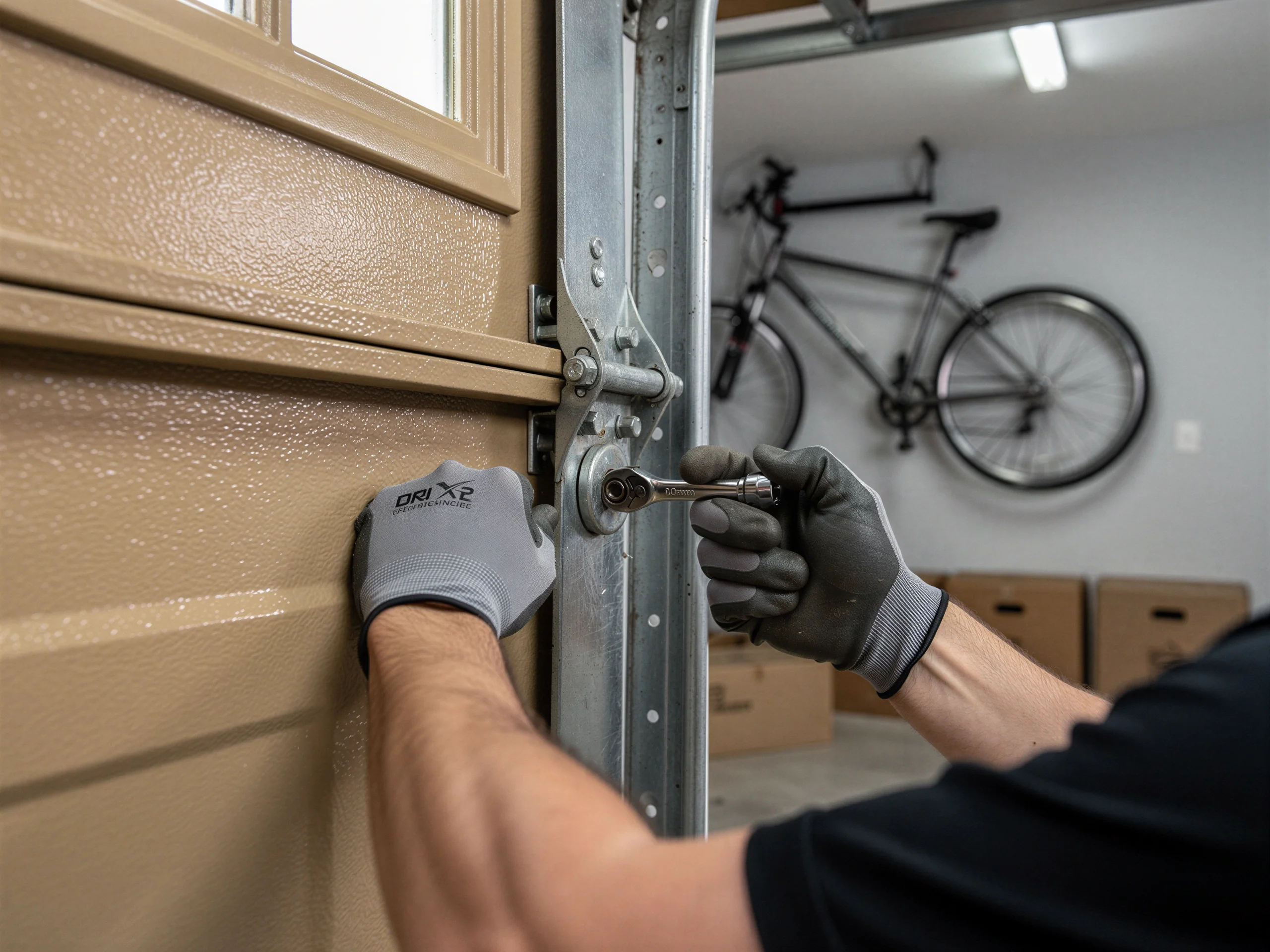
We'll say this straight: torsion springs are under enough tension to cause serious injury, and we don't recommend a homeowner attempt that repair without the right winding bars and clamps.
Release cord safety check
Extension springs are somewhat more forgiving but still carry real force when stretched. What you can safely check yourself: make sure the opener isn't the problem by disconnecting it (pull the red release cord) and lifting the door by hand. If it's heavy and uneven, that confirms a spring issue rather than an opener issue.
Matched spring tension check
You can also visually inspect the spring for a visible gap in the coil, and check whether both springs on a double-spring setup look matched in tension - mismatched springs are a common cause of one side sagging. Beyond that, leave the winding and tensioning to someone with the bars and the clamps.
Winding bars cause injuries
A spring that slips while being wound can put a bar through drywall or worse. This is one of the few garage door jobs where the part cost is small relative to the risk of doing it without the right tools.
Why It Happens Here
Three things combine in the Boerne service area to make spring failure a steady call, not a rare one. First, the age of the housing stock: with most homes built between 1972 and 2005, and a heavy concentration in the 1980s and 90s, a lot of torsion springs are either original or on their first replacement and well past typical cycle life. Second, the climate here runs mild with occasional freeze - not the brutal swings that crack steel fast, but enough temperature movement across the year that coil steel fatigues gradually rather than all at once, so failures tend to cluster as these mid-80s-to-2000s builds all hit the same age window around the same time.
Third, these are owner-occupied homes for the most part - 15,024 of the roughly 16,311 households in the area own rather than rent - and an owned home tends to get used daily for years without anyone thinking about the spring until it bangs. Nobody budgets for a part they can't see failing slowly behind a closed door.
We don't have failure-rate data broken down by exact subdivision, so we won't claim one neighborhood fails more than another. What the housing age tells us is the range of years most of these springs are up against, and that's enough to know why the phone rings the way it does.
Talk to a local pro
Garage door service in Boerne?
Same-day service with honest, upfront quotes.