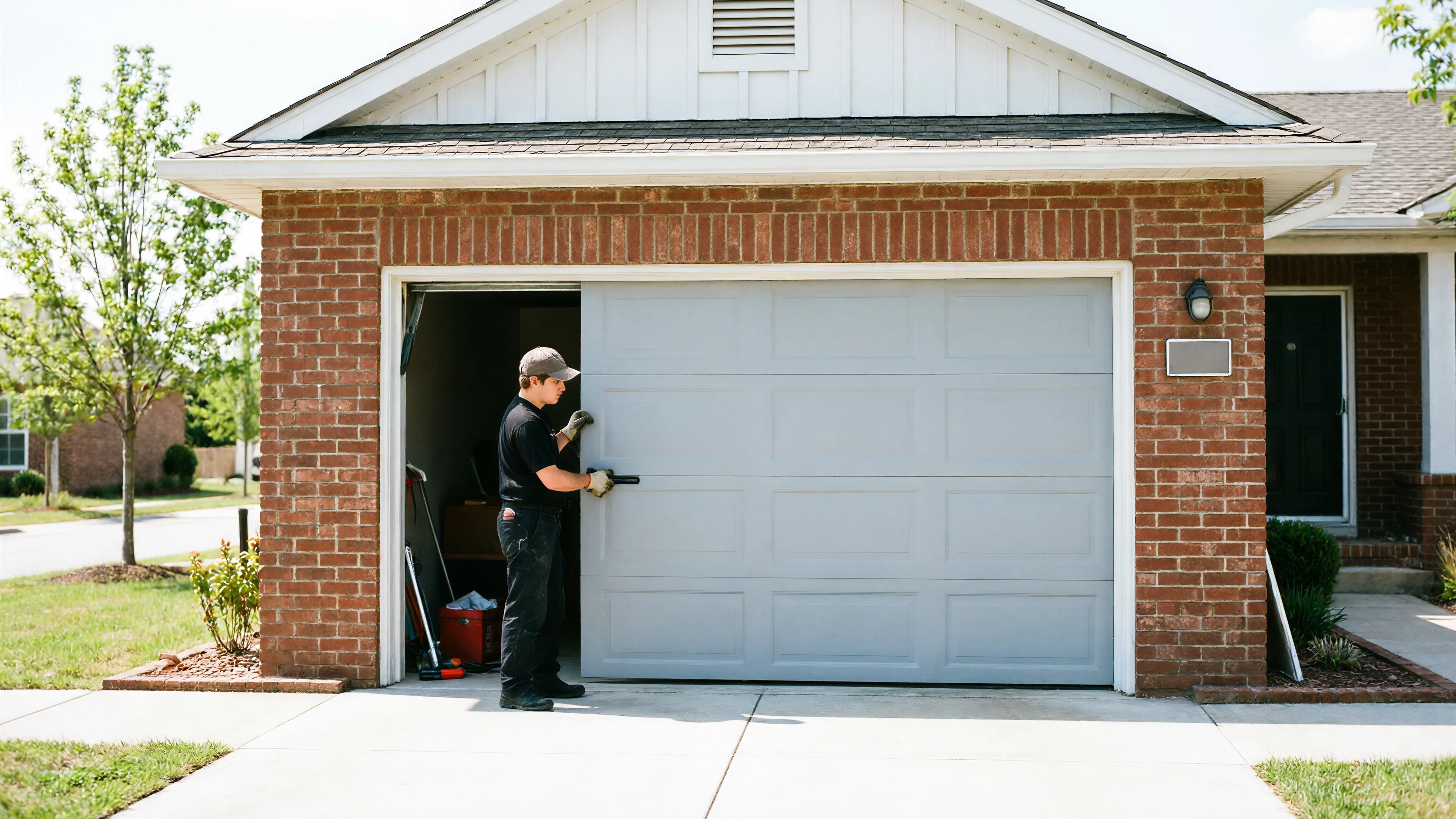
What Can Go Wrong
Rollers wear out in a few specific ways, and which way yours failed usually tells us what's underneath the bracket. Plain steel rollers, the kind builders put on garage doors from the 1970s through the early 2000s, wear down at the stem first.
Roller flat spots and wobble
The roller itself gets a flat spot, the stem loosens in its sleeve, and the whole wheel starts to wobble inside the track instead of rolling smoothly through it. Nylon rollers fail differently - the wheel cracks or chips, usually after years of sun and heat baking the plastic from outside the door, and chunks of it end up on the garage floor.
Bent brackets and snapped stems
Brackets bend. Stems snap clean off if a roller seizes and the door keeps forcing it through the track anyway. On older builder-grade doors we also find roller brackets that were never upgraded when the springs or cables were serviced, so the bracket is original 1980s or 90s steel holding a roller that's been replaced once or twice already.
Binding rollers escalate fast
None of these are emergencies the first week they start, but they get worse fast once a roller starts binding, because the opener keeps pulling the door through a track it doesn't want to travel anymore.
The Symptom
You'll hear it before you see it. A grinding or screeching sound as the door travels, usually worse at one or two spots in the track rather than the whole way up or down - that's a flat-spotted or dry roller catching on the rail.
Shopping cart wheel noise
Some owners describe it as a shopping-cart-wheel sound. If a roller has cracked or lost its stem entirely, the door can jerk or hesitate at that point in the track, and you might see the panel sag slightly to one side as it travels.
Door jumps the track
In worse cases the door jumps the track at that roller's position, which locks the opener out and leaves the door stuck half open or half closed. A wobbling top panel while the door is fully open is another sign - that's usually the top roller, the one doing the most work going around the curve into the horizontal track.
Mid-cycle failure risk
None of these symptoms go away on their own, and waiting usually means the roller finishes failing while the door is mid-cycle, which is a worse repair than catching it on the bench.
Doing It Yourself
Lubricating rollers is a fine DIY job - a silicone-based garage door lubricant on the roller stems and hinges a couple times a year is genuinely useful maintenance, and it's one of the few things an owner can safely do themselves.
Top rollers near spring
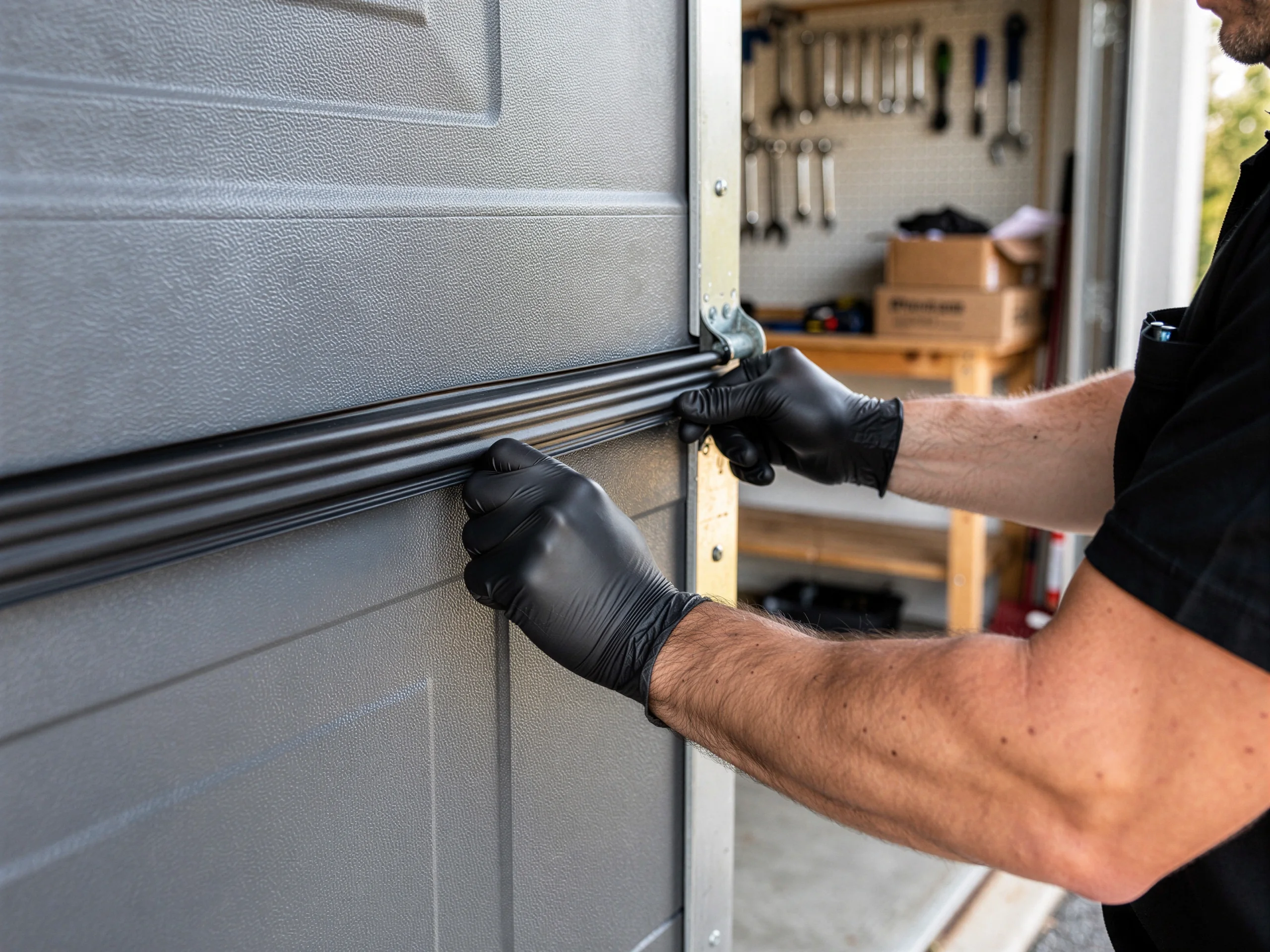
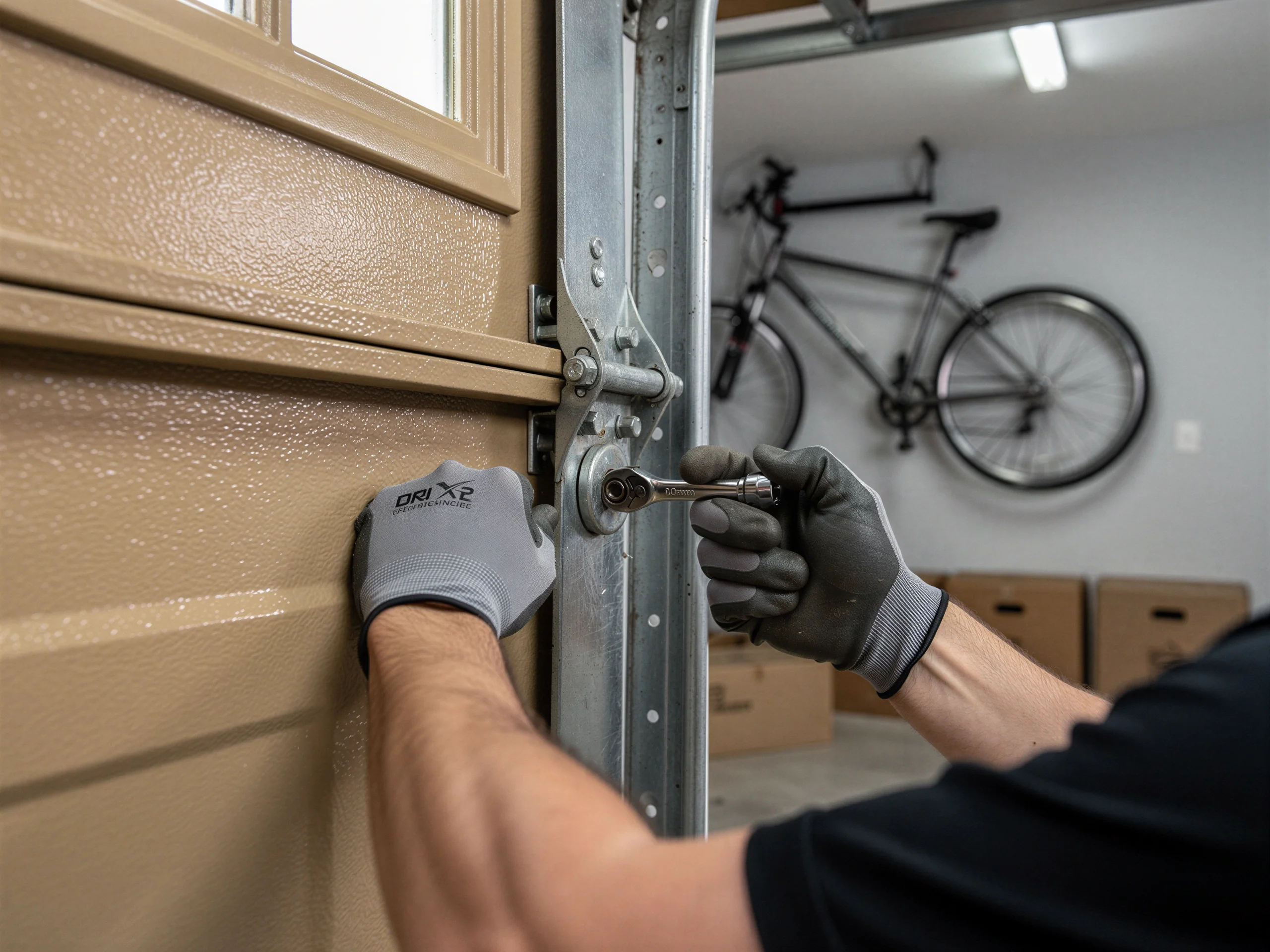
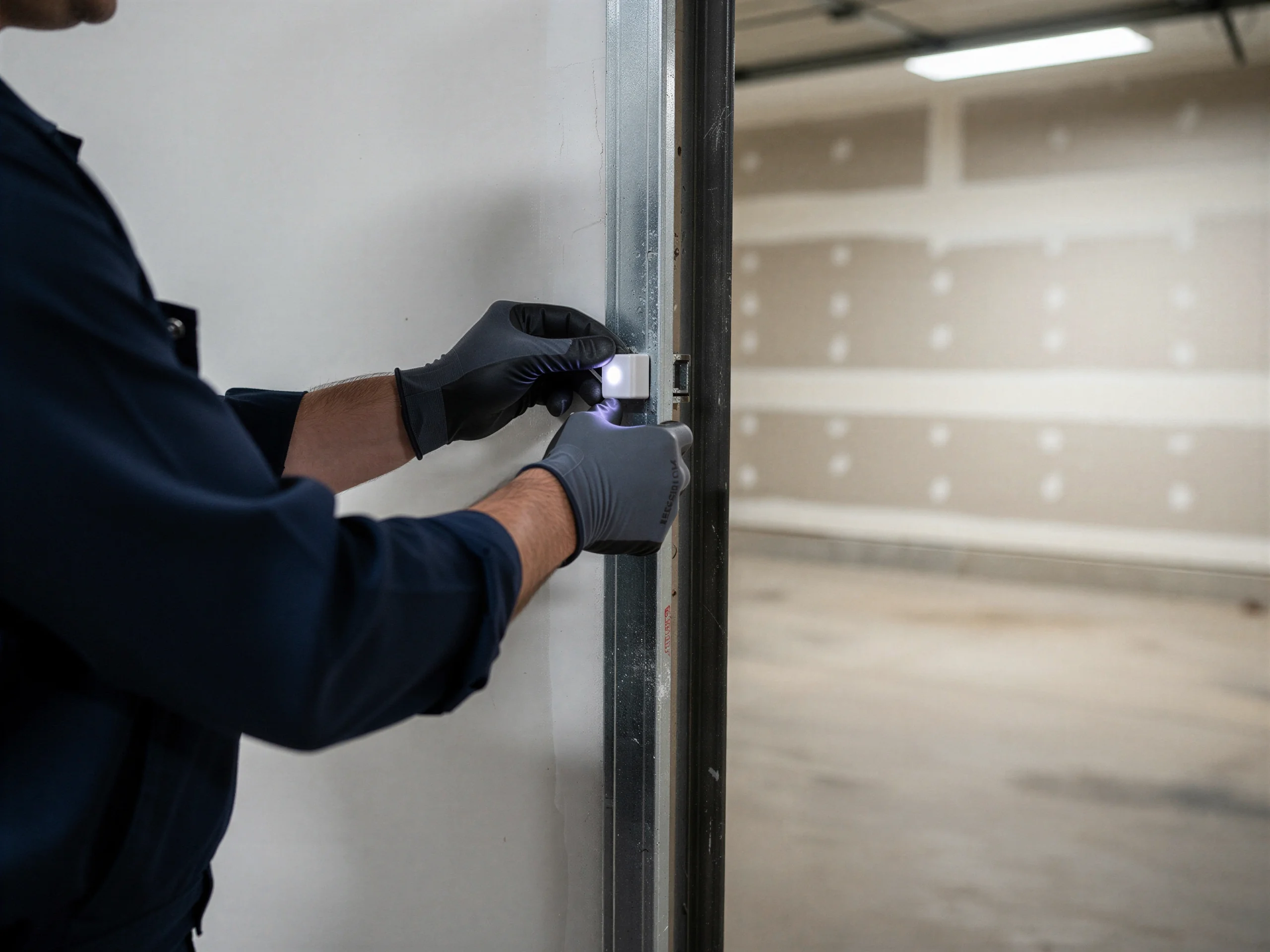
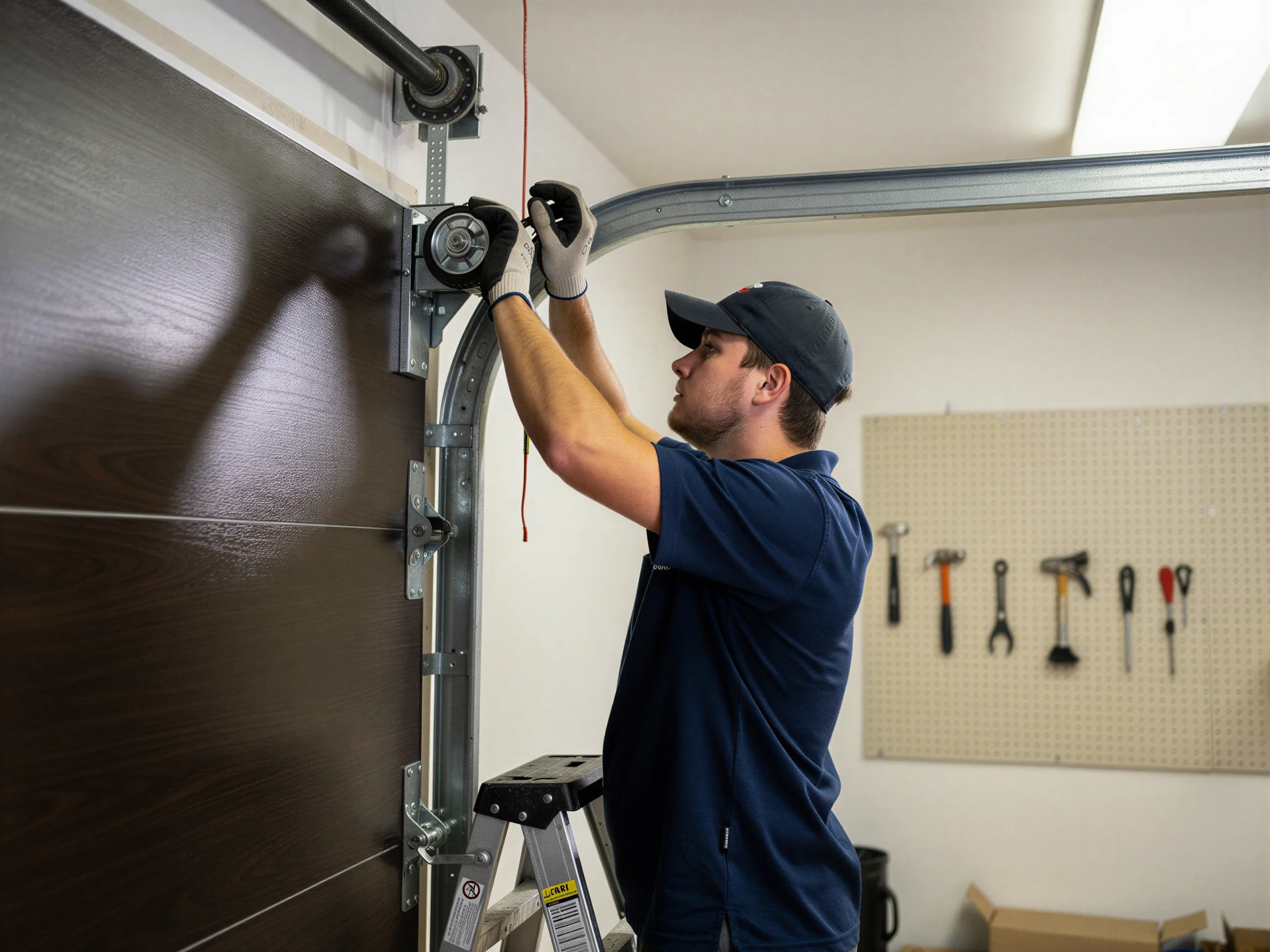
Replacing the rollers is a different job. The bottom rollers aren't bad if the door is down and the opener is disconnected, but the top rollers sit inside the curved track section right where the door carries the most spring tension, and getting a bracket off there without releasing that tension correctly is how people get hurt.
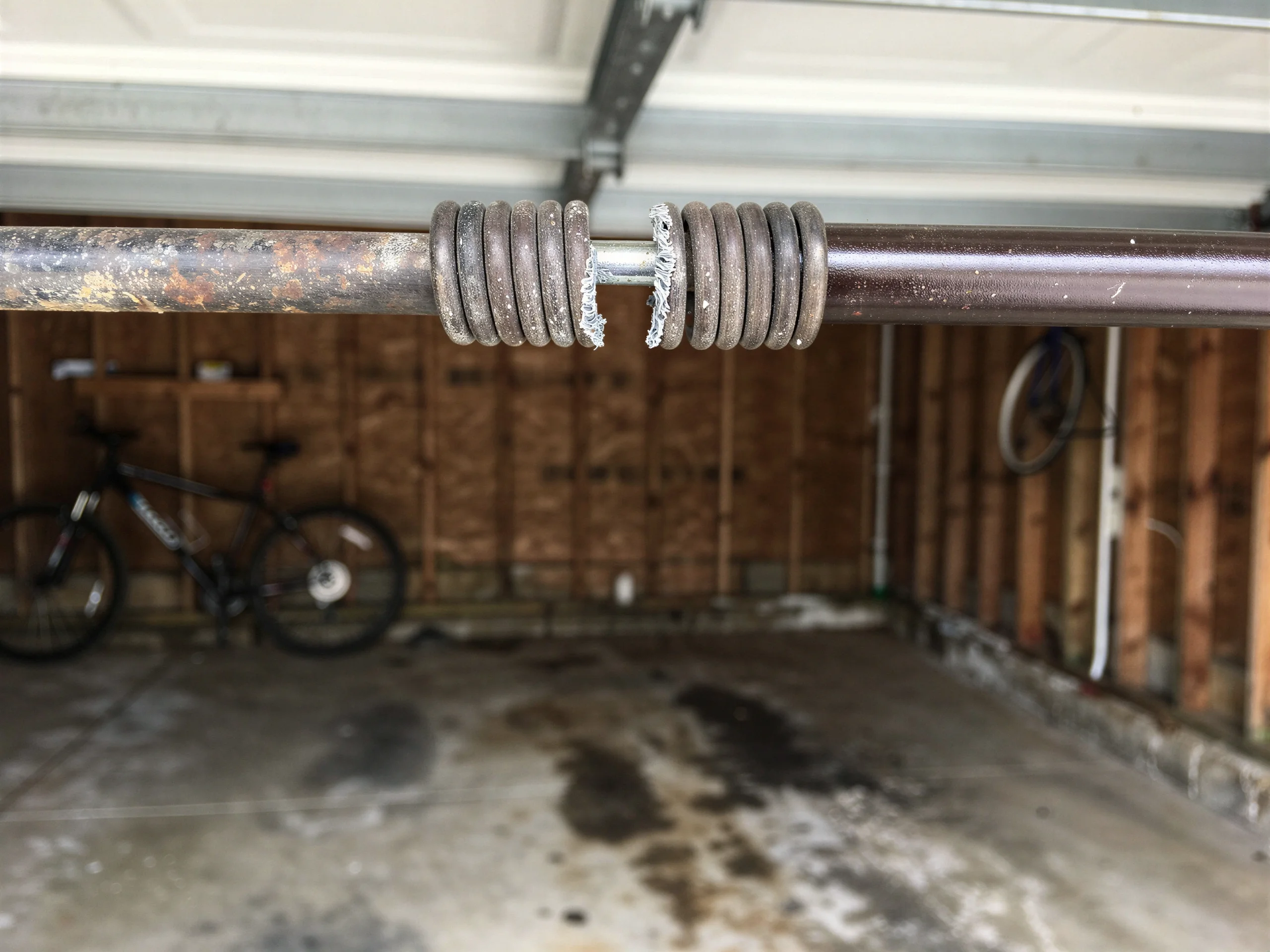
Torsion spring holds weight
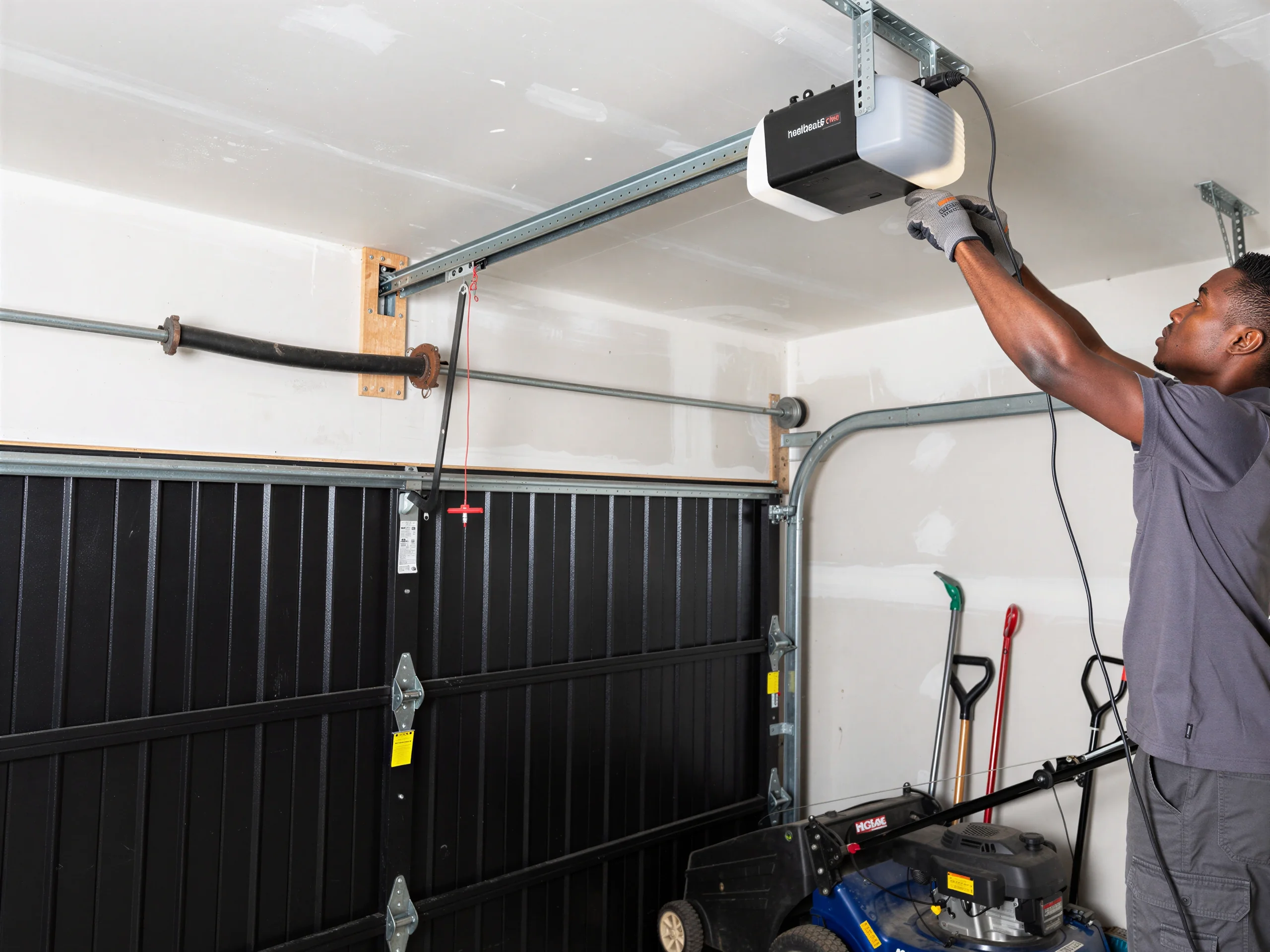
We won't talk anyone through doing that over the phone, and that's not us being cautious for no reason - it's a torsion spring holding the weight of the whole door, and it doesn't forgive mistakes. If you're only replacing one or two rollers and the track itself is straight and tight, it's a reasonable job to hand to a pro rather than attempt cold.
Track damage needs more work
If the track is bent or the bracket is pulling away from the jamb, that's a bigger repair than a roller swap, and we'll tell you that honestly instead of just swapping the roller and sending you on your way.
Why It Happens Here
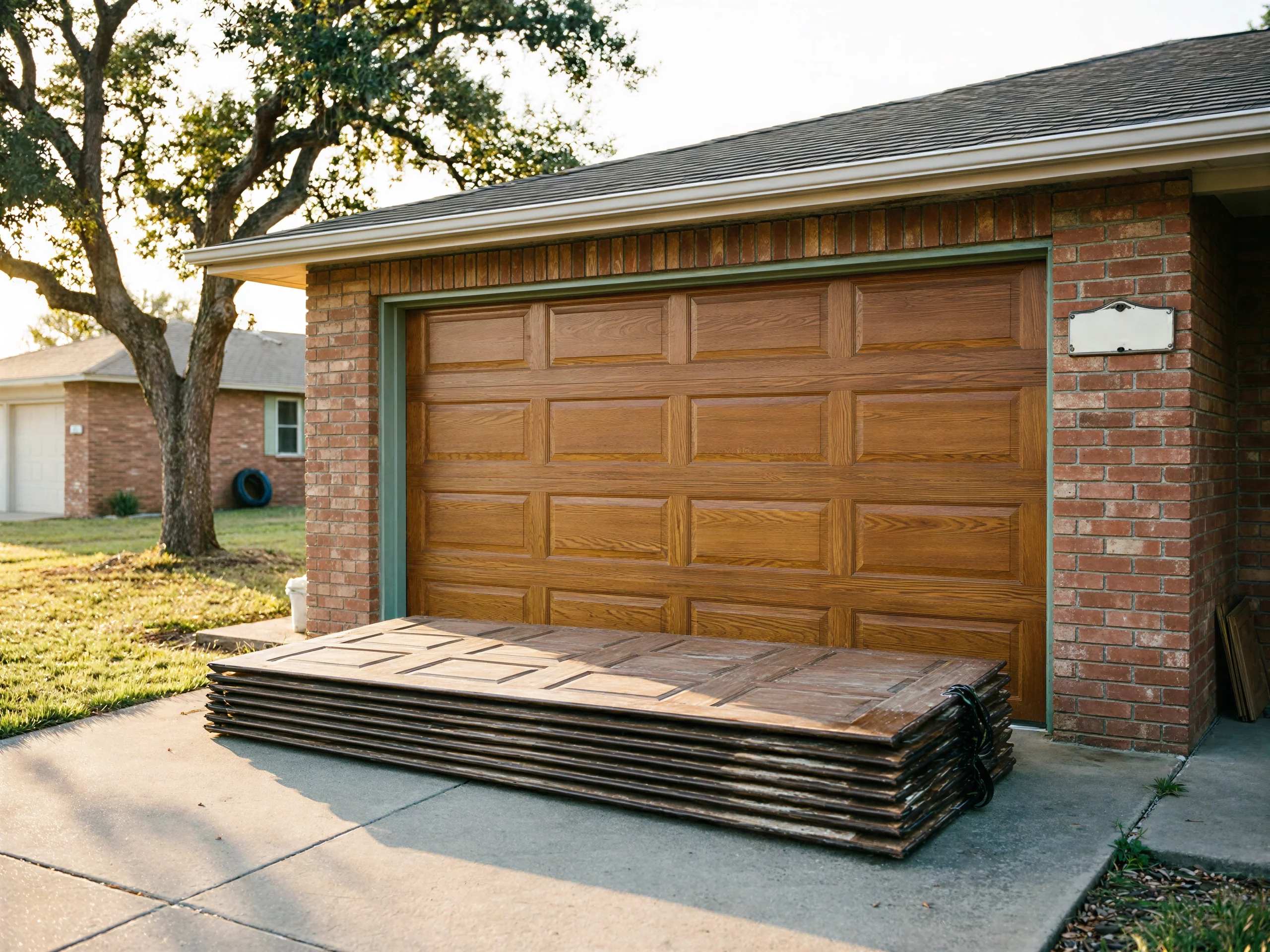
Housing across this service area mostly went up between 1972 and 2005, with the typical build year sitting around 1997, and eight named pockets of 1980s and 90s construction make up most of that stock. Doors from that era came with plain steel rollers on steel track almost universally - sealed nylon rollers weren't standard builder equipment yet. Thirty to fifty years later, those original rollers are well past their service life, and a lot of the roller calls we get are on doors that have never had the rollers touched since the house was built. The climate here is mild with only occasional freeze, which sounds easy on hardware, but that freeze-thaw swing still stiffens old grease and lets rust take hold on steel rollers that sit unused for stretches, then get run hard again once the weather turns. Across the roughly 16,311 households and 15,024 owner-occupied houses in this area, that's a lot of original hardware still in service. With median household income here at $135,120, most owners we talk to choose to upgrade to sealed nylon rollers when we're already in there, rather than putting steel back in to fail the same way again in another twenty years.
Talk to a local pro
Garage door service in Boerne?
Same-day service with honest, upfront quotes.