Doing It Yourself
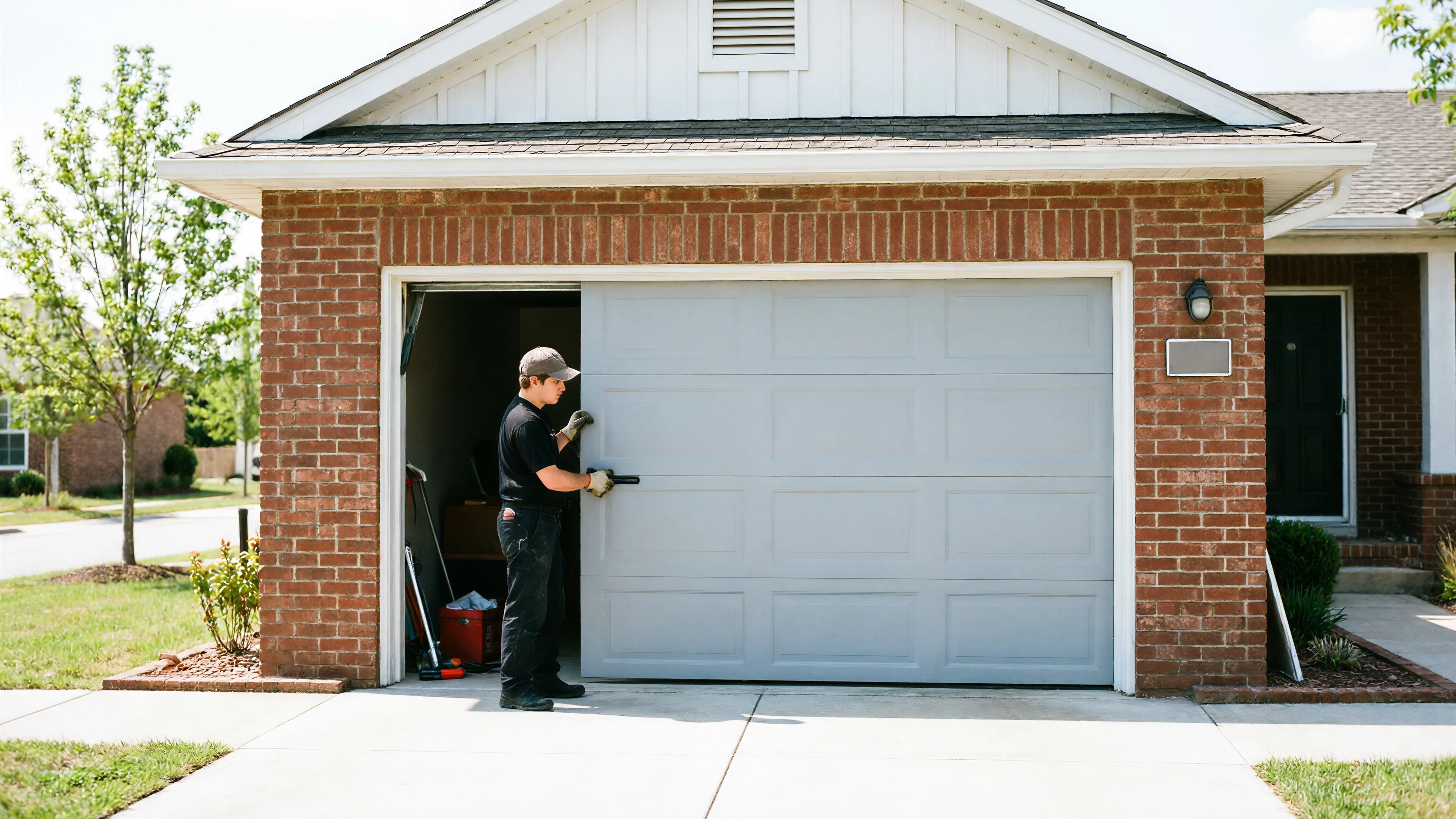
A lot of what goes wrong on a door this old is diagnosable from the driveway. Pull the release cord, lift the door by hand, and feel where it binds - if it's heavy and uneven, that's spring fatigue, not an opener problem.
Rust bleed and flat spots
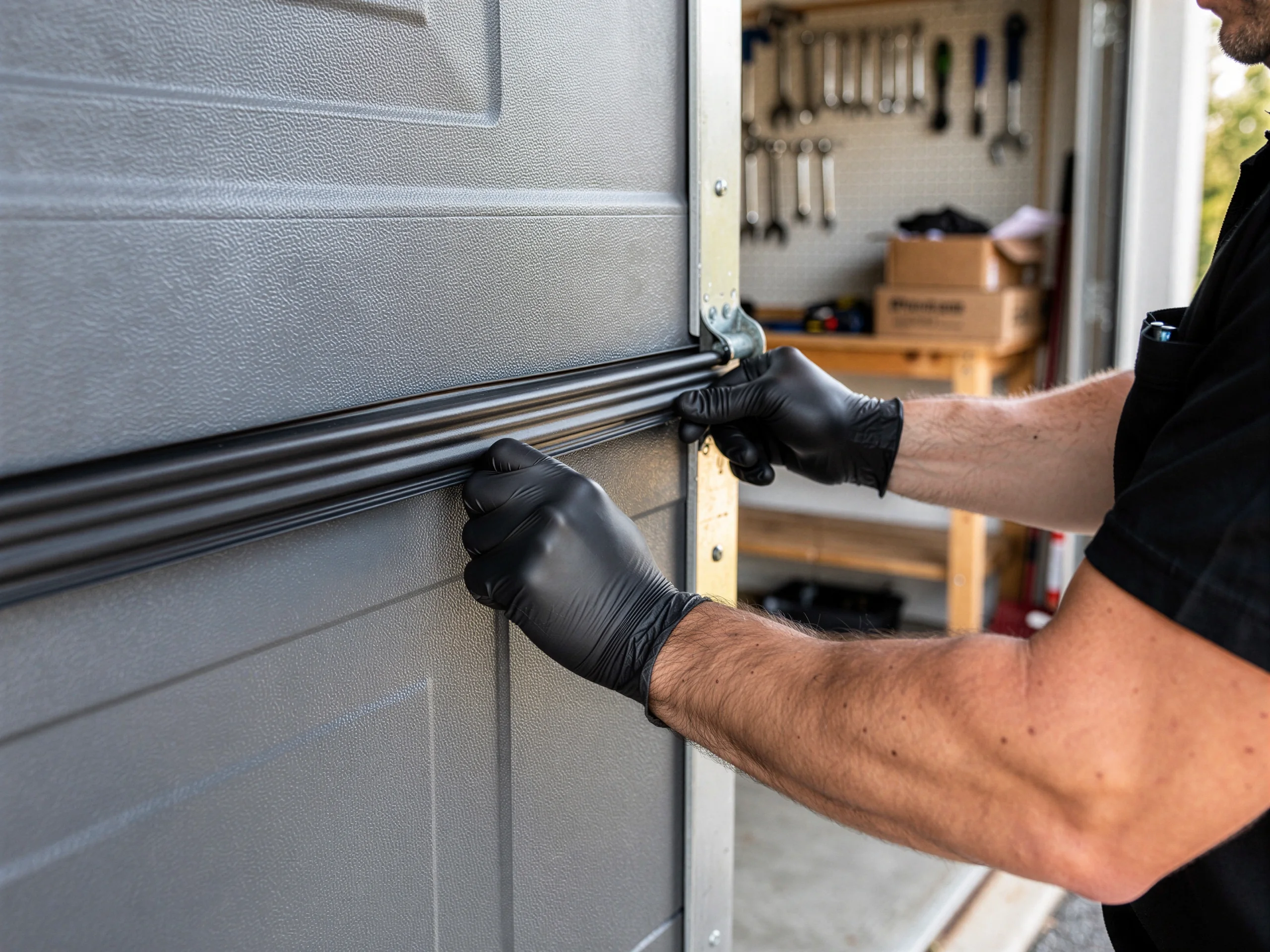
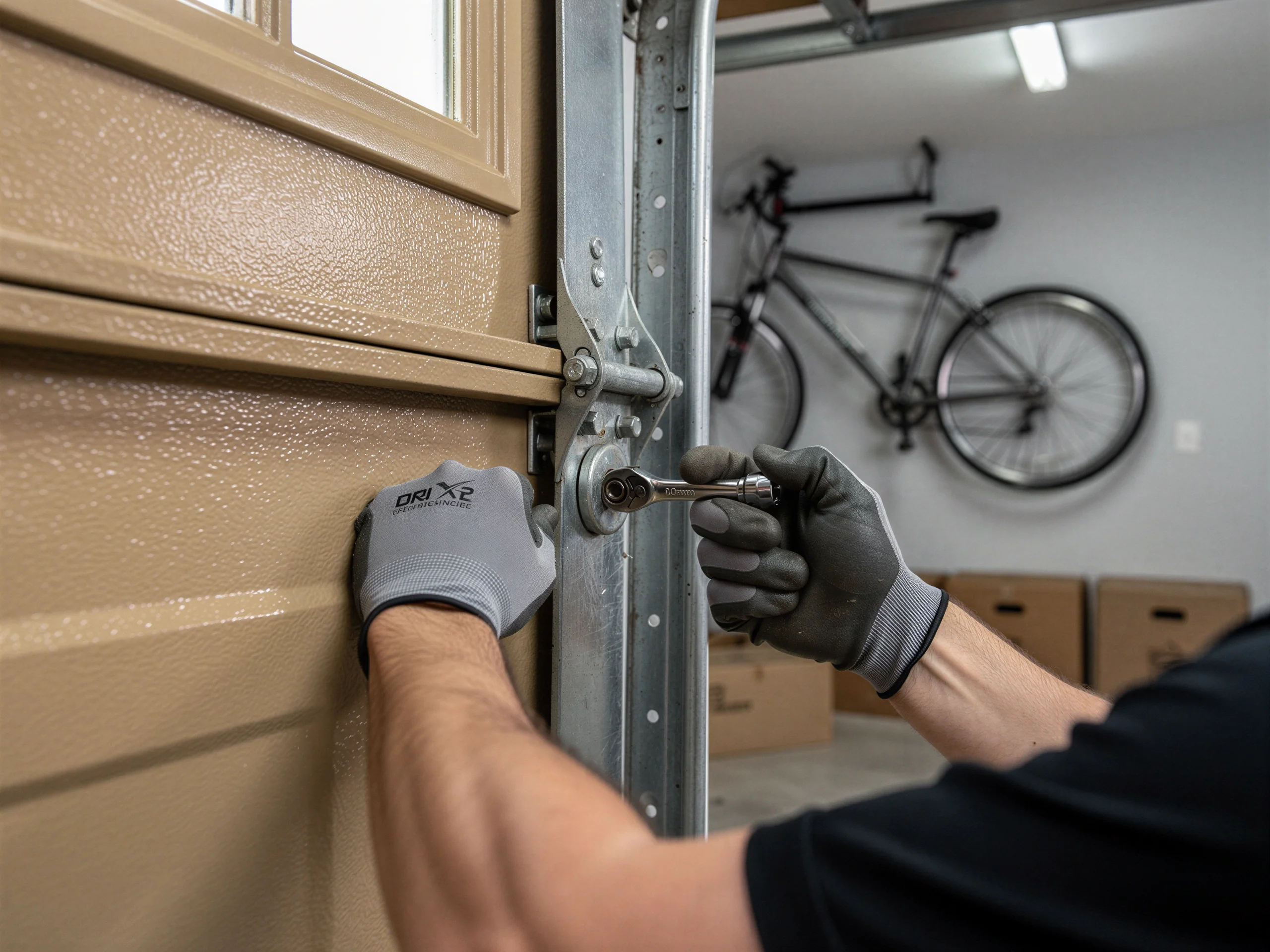
Check the rollers for flat spots or rust bleed on the track, common on original hardware that's never been swapped. You can tighten loose roller brackets and lubricate hinges yourself with a silicone-based spray; skip the WD-40, it attracts grit.
Winding cones stay off limits
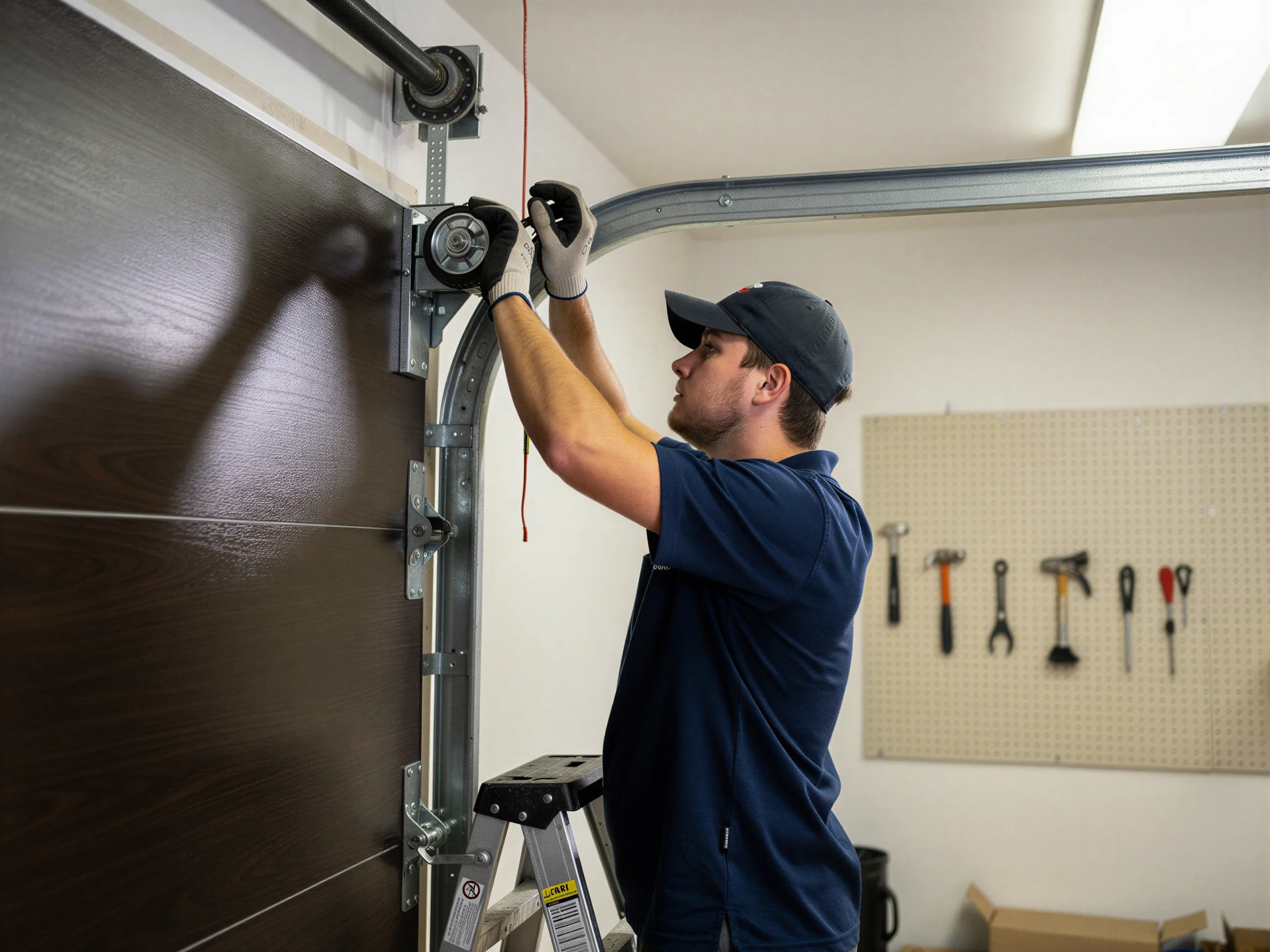
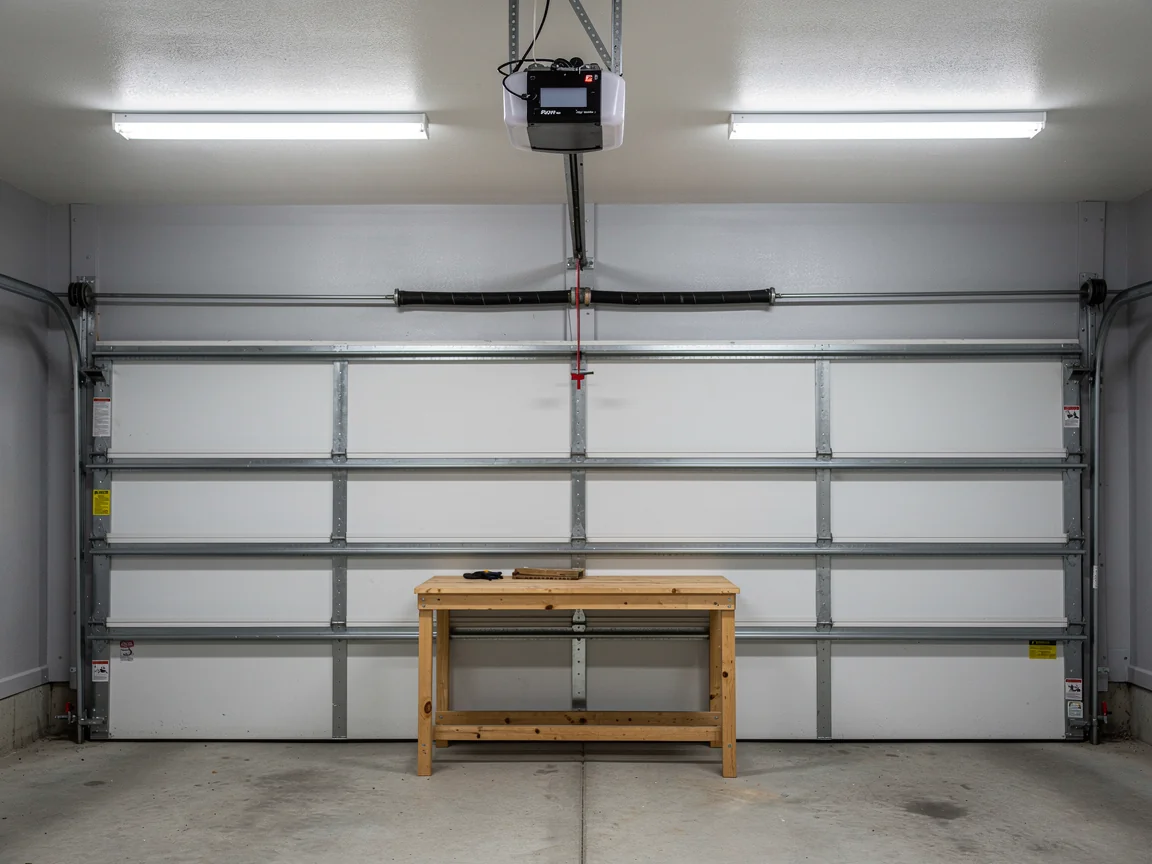
What you should not touch: the torsion spring itself, or anything on the shaft above the door. On a door this age the spring is wound to a weight spec for the original steel panel, and the winding cones are under enough tension to break a wrist or worse if the bar slips.
Spring work as ER risk
We also won't talk you through spring replacement over the phone - it's the one repair on this list where a mistake doesn't mean a callback, it means an ER visit. If the door won't lift by hand at all, stop and call it in rather than forcing the opener to do a spring's job; that's how you burn out a motor on top of the spring problem.
How to Book
We run out of Boerne, about 19 miles from Hollywood Park, so there's no local depot or branch here - the truck comes to you, and we build the drive into how we schedule the day rather than promising a drop-everything window. Call and describe what the door is doing: binding, off-track, dead opener, or the spring itself. For a look at what we handle in Hollywood Park specifically, see garage doors in Hollywood Park, and for the full service list across the territory, garage door repair in Boerne covers it. Have the door's age and panel material (steel vs. wood) ready when you call - on a 1972-era door that alone tells us which spring and roller stock to load before we leave the shop.
The Symptom
Most of what we get called out for in Hollywood Park starts the same way: a single-layer steel door, no foam core, hung on a torsion spring sized back when the house went up around 1972. That's noticeably earlier than the 1997 median across the rest of the territory we cover, which means these doors are often carrying their original spring and drum assembly decades past the cycle count it was rated for. The symptom shows up as a door that reverses halfway, drops the last foot with a bang, or needs two hands to lift manually. Sometimes it's quieter - a slow sag on one side where a cable has started to fray on an original non-galvanized drum. None of this is an opener problem even though the opener usually gets blamed first, because it's straining against a spring that's lost its wind.
What Is on the Truck
For a neighborhood built around the early 1970s, we carry torsion springs in the heavier wind weights that matched steel doors from that era, since lighter modern composite-door springs won't balance an original panel correctly.
Galvanized cable and drums
We also stock galvanized cable and drums to replace the originals, which on a door this age are often the first thing to go after decades of sun and temperature cycling.
Nylon and steel rollers
Rollers come in both nylon and steel on the truck, because a lot of these doors still run steel rollers that have never been upgraded and are loud for it.
Discontinued 1970s panel profiles
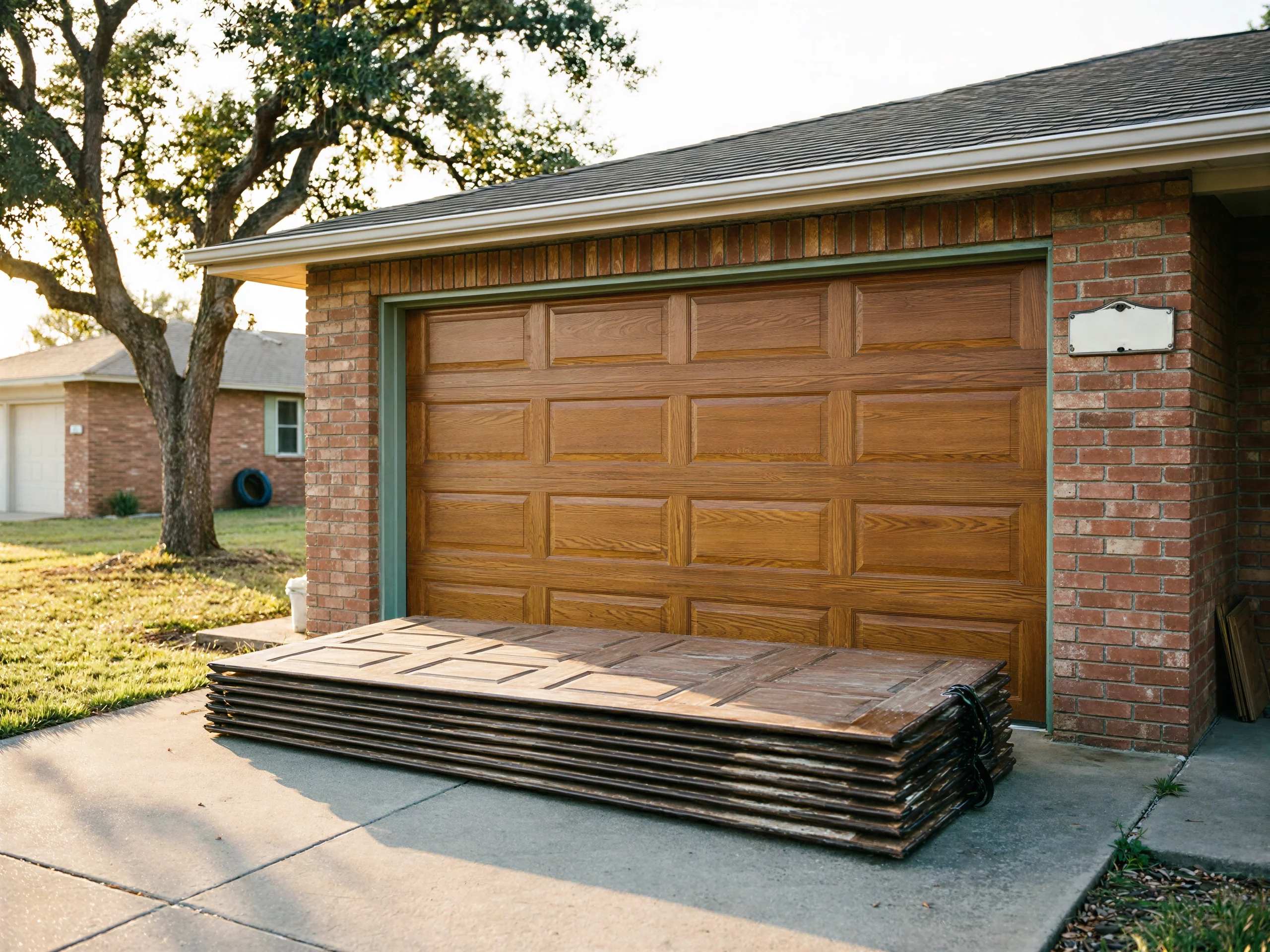
One thing we don't carry stock for: matching replacement steel panels for a specific original door profile from the 1970s - if a single panel is dented beyond repair and the manufacturer no longer makes that profile, we're honest that a full door replacement beats chasing a panel match.
Why It Happens Here
The climate band here is mild with occasional freeze, not the deep-freeze cycling that kills hardware up north, but it still matters on a door this old. Steel contracts in the cold snaps and expands through the long warm stretch, and on a spring that's been doing that every year since 1972, the metal fatigues even without heavy daily use. Add in that median income across the broader service area runs $135,120, with Hollywood Park running a bit above that at $140,357 - these are houses where the garage door usually isn't the first thing in the budget, so original hardware tends to stay in service long after it would've been swapped out somewhere with tighter turnover. With 1,168 households in Hollywood Park against more than 16,000 across the full territory, it's a small enough pocket that the housing age is consistent block to block, not a mixed bag of eras.
What Can Go Wrong
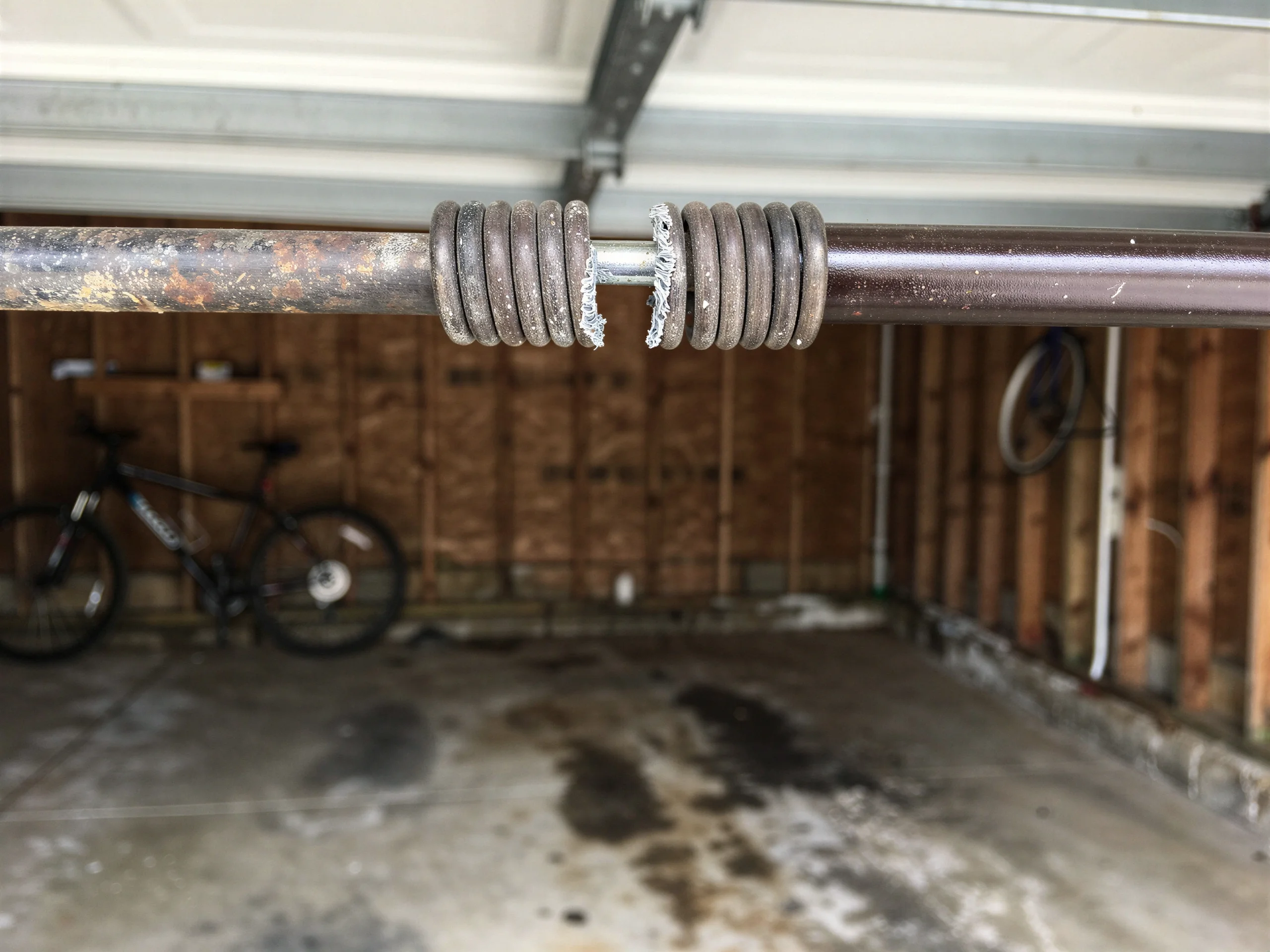
Leave a fatigued torsion spring alone long enough and it doesn't just get stiff, it snaps - usually loudly, usually when someone's opening the door, and the broken end can whip hard enough to dent the header or crack a knuckle if a hand's nearby.
Cable failure racks track
A fraying cable on an original drum can let one side of the door drop suddenly while the other stays up, racking the track and bending it in a way that's a lot more expensive to fix than the cable would've been.
Motor burnout from strain
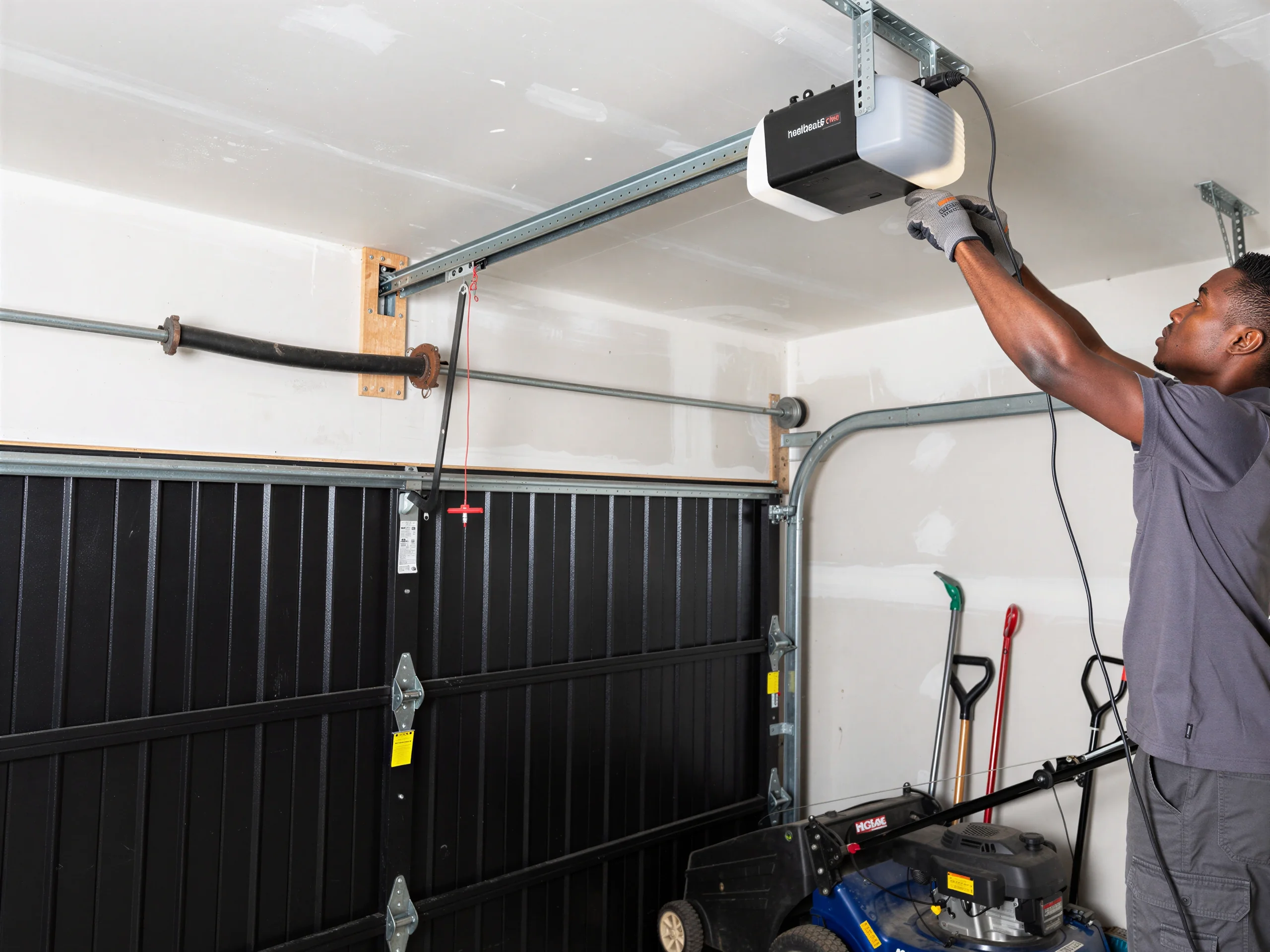
On the opener side, a motor that keeps straining against a bad spring will eventually burn out the drive gear, turning a spring job into a spring-and-opener job.
Early sag catching matters
None of this is reversible once it happens, which is the real argument for catching the sag or the bang-drop early rather than waiting for a single failure point to take the rest of the door with it.
Talk to a local pro
Garage door service in Boerne?
Same-day service with honest, upfront quotes.