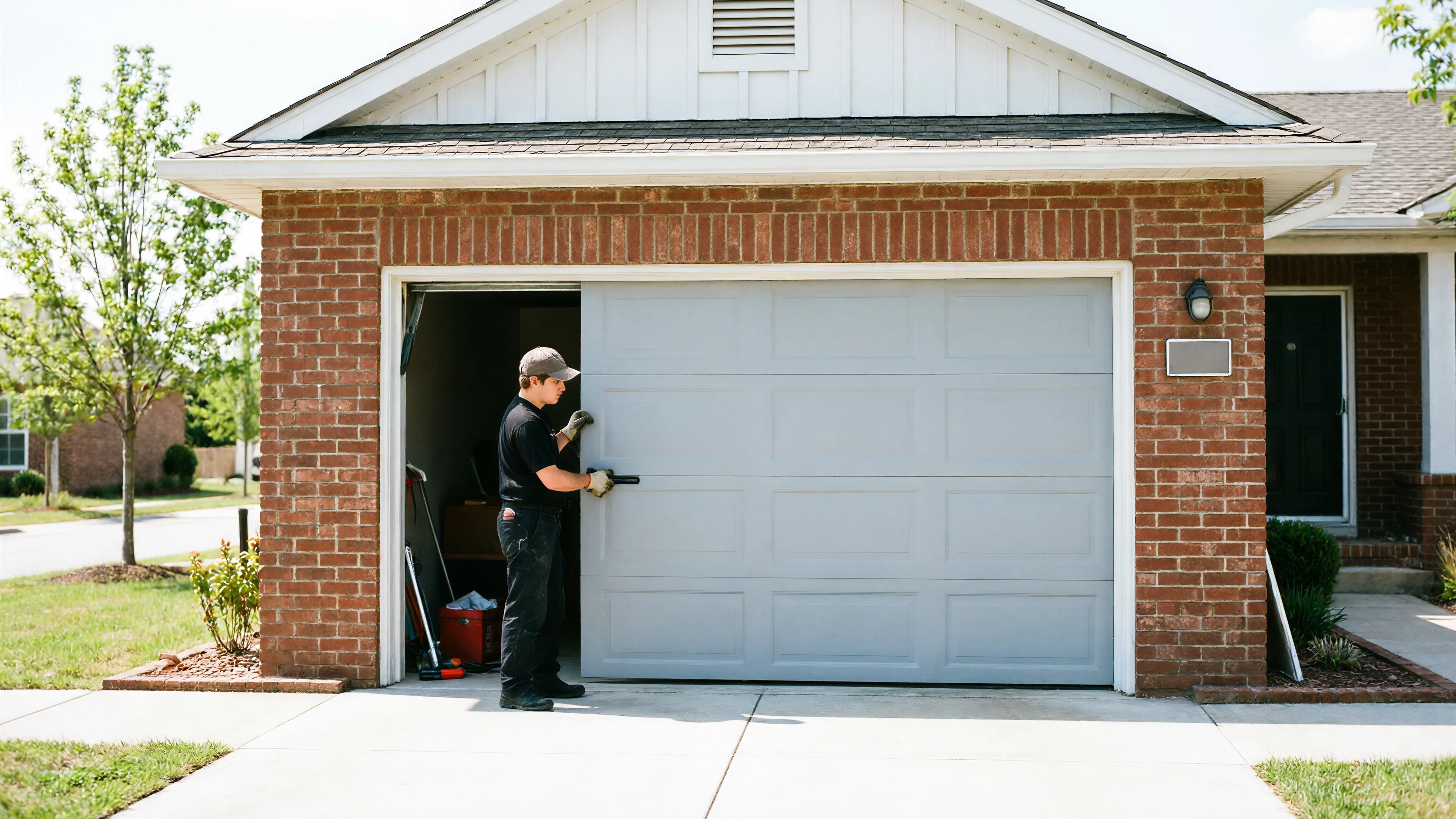
How to Book
We're based in Boerne, about 17 miles from Lakehills, so a call here isn't a same-day drop-in the way it might be for a street five minutes from the shop.
Symptoms decide the visit
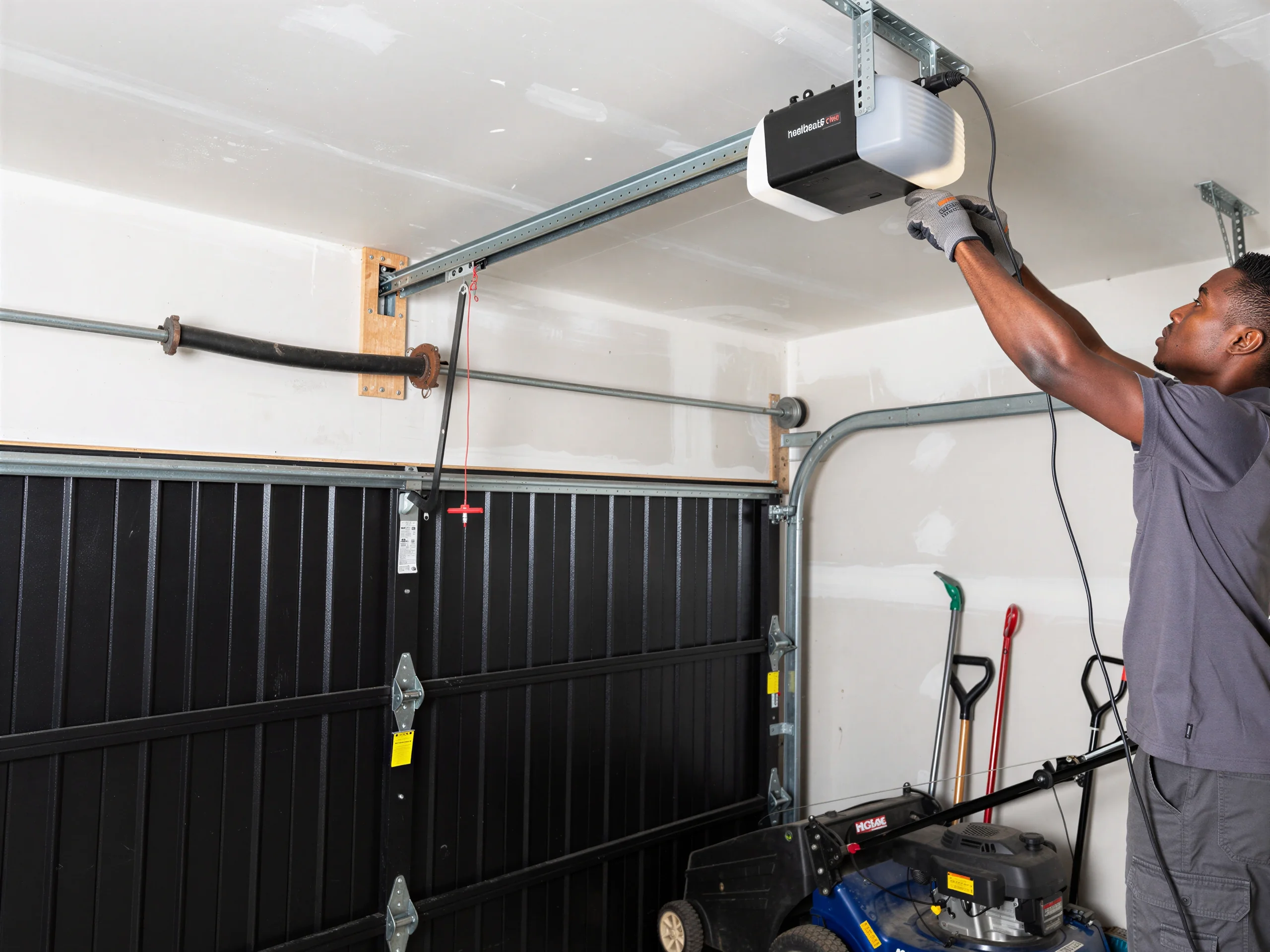
Tell us what the opener is doing - grinding and not lifting, lifting partway and reversing, lights blinking a code - and we'll tell you honestly whether it sounds like a motor job, a board job, or a sensor job before we load the truck.
Model number helps booking
That matters more out here than it does closer in, because a wrong first guess means a second 17-mile trip. If you can get the model number off the motor housing, or even a photo of it, send it along when you book. It saves a diagnostic step once we're standing in the garage.
Parts confirmed before driving
We don't keep a branch or a stocked van sitting in Lakehills itself, so parts for anything unusual get confirmed before we drive out, not after. See garage door service in Lakehills for the rest of what we cover on these trips, or check opener repair in Boerne if you're closer to town.
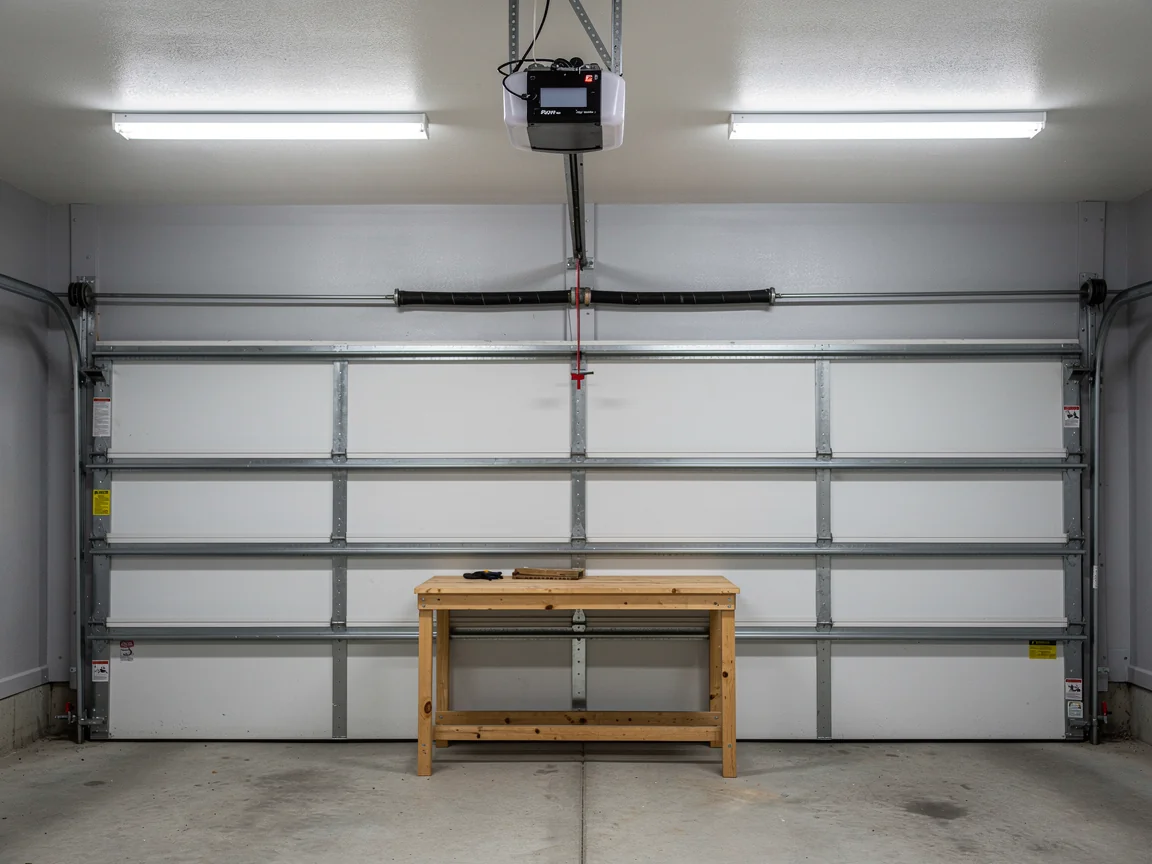
What Can Go Wrong
An opener installed around 1996, which is the median build year for houses out here, is now old enough that its logic board is a different generation of electronics than anything sold today.
Dried-out capacitors
The capacitors on these boards dry out and fail even when the motor itself is fine - you get a unit that hums, tries, and drops the door, or one that simply stops responding to the wall button and the remote both.
Chain-drive gear stripping
Chain-drive openers from that era also wear their drive gear down over fifteen-plus years of nightly use, and when the gear strips, the chain rattles loose but the motor keeps spinning like nothing's wrong.
Photo-eyes knocked askew
Separately from the opener itself, federal law required photo-eye safety sensors on new residential openers starting in 1993, so most Lakehills units already have them - but the sensor eyes themselves get knocked out of alignment by a bumped car or a settling slab, and a misaligned sensor will refuse to close the door at all, which homeowners often mistake for a motor failure.
Doing It Yourself
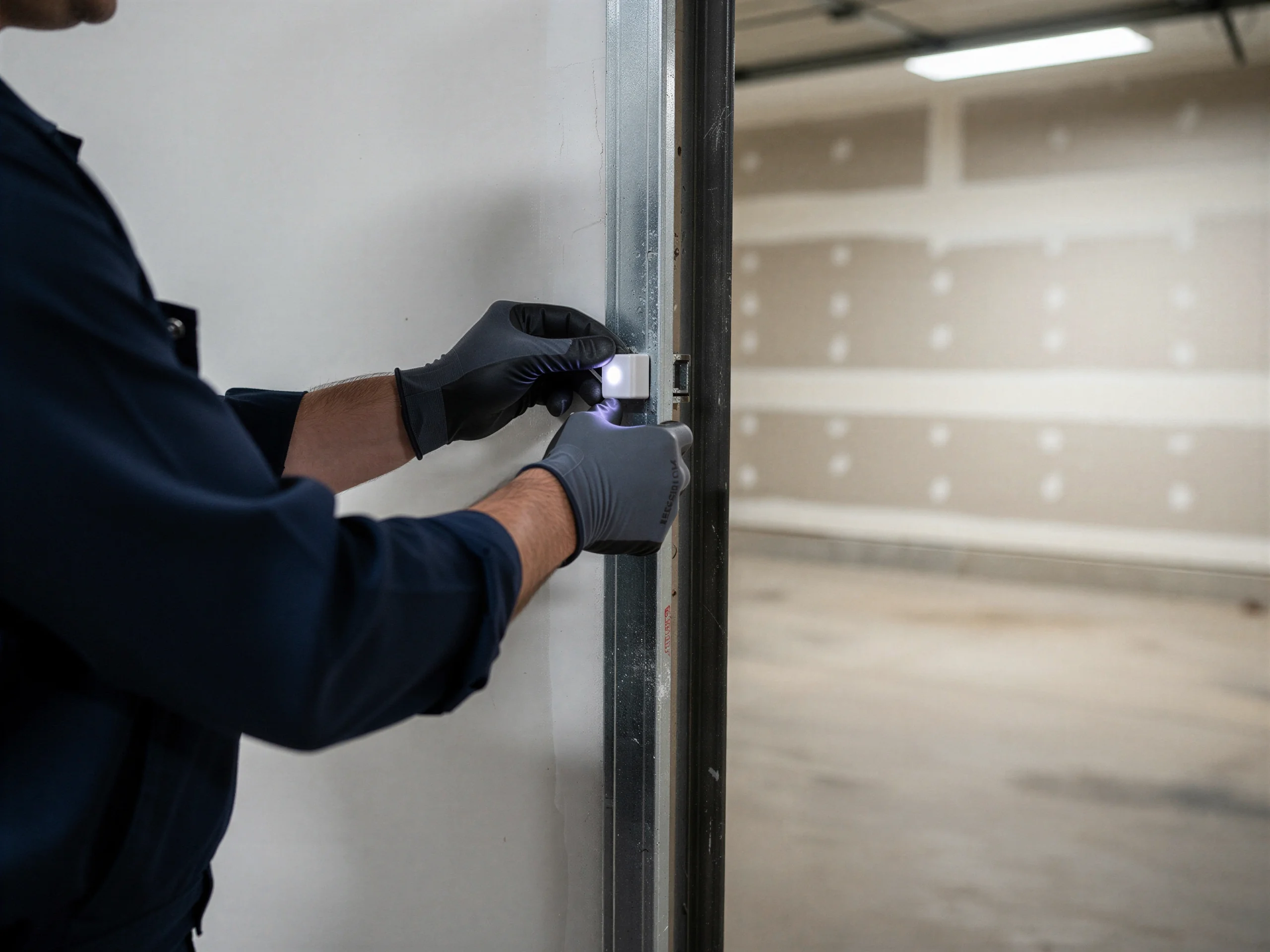
Before you call anyone, unplug the opener, plug it back in, and watch whether the two small sensor eyes near the floor on each side of the track are lit steady, not blinking.
Nudge photo-eyes into line
If one's blinking, nudge it gently until both line up - that single fix solves more "my opener won't close" calls than anything else. Next, pull the manual release cord and lift the door by hand.
Heavy door points to spring
If it's heavy or uneven, that's a spring problem, not an opener problem, and no amount of opener work will fix it; stop there and call, because a torsion spring under tension isn't a safe DIY repair. If the door lifts fine by hand but the motor won't engage, check the wall switch wiring at the two screw terminals on the motor unit - these loosen over years of vibration.
Leave logic board alone
What you shouldn't do is open the logic board housing yourself; the board for a 1990s-era motor is often harder to source than the labor to diagnose it, and a board you can't identify correctly isn't one you want to guess on.
Why It Happens Here
Lakehills' housing stock centers on 1996, squarely inside the broader service area's 1972-2005 building window, which means the openers original to these houses are now closing in on thirty years of nightly cycles - long enough for mechanical wear to show up even on units that were well built to start. With roughly 2,289 households in town, that's a meaningful number of garages running hardware from roughly the same production decade, which is why we see the same handful of failures - worn drive gears, dried-out capacitors, sagging sensor brackets - repeat house after house rather than scattered across every possible fault. At a median household income of $85,409, the calculation most owners here land on is straightforward: fix the board or motor if the rest of the unit is sound, replace the whole opener if the gearing is also stripped, rather than spend on both separately over two visits.
What the Repair Takes
Most opener repairs here split into three buckets: a sensor realignment, which takes minutes and no parts; a board or capacitor swap, which depends on whether that specific board is still sourceable for a unit this old; or a full motor replacement when the gearing's gone along with the electronics. We'll tell you straight if your unit falls into that third bucket - at some point a 1990s chain-drive motor costs more in labor hours chasing parts than a new opener costs installed, and we're not going to string out a repair on a unit that's genuinely done. What we won't do on a Lakehills call is guess at a part number sight unseen and show up with the wrong board; given the drive out here, we confirm compatibility before we load the truck, which sometimes means the first visit is diagnosis only and the fix is a second trip.
Talk to a local pro
Garage door service in Boerne?
Same-day service with honest, upfront quotes.