What Is on the Truck
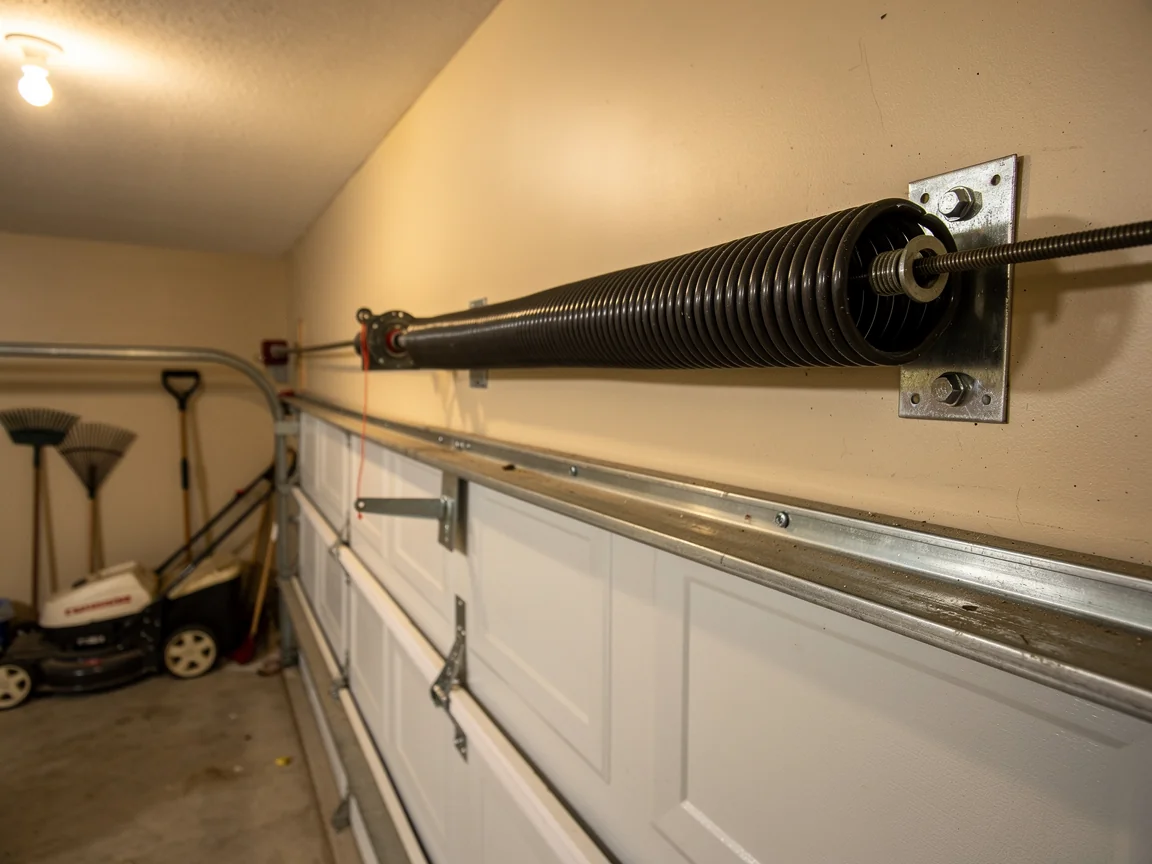
Most houses in Bulverde went up around 1995, which means the garage door hardware behind them is almost always original: a single torsion spring on a center bracket, sized for a door that's now closer to 30 years old than new.
Spring specs for 1995
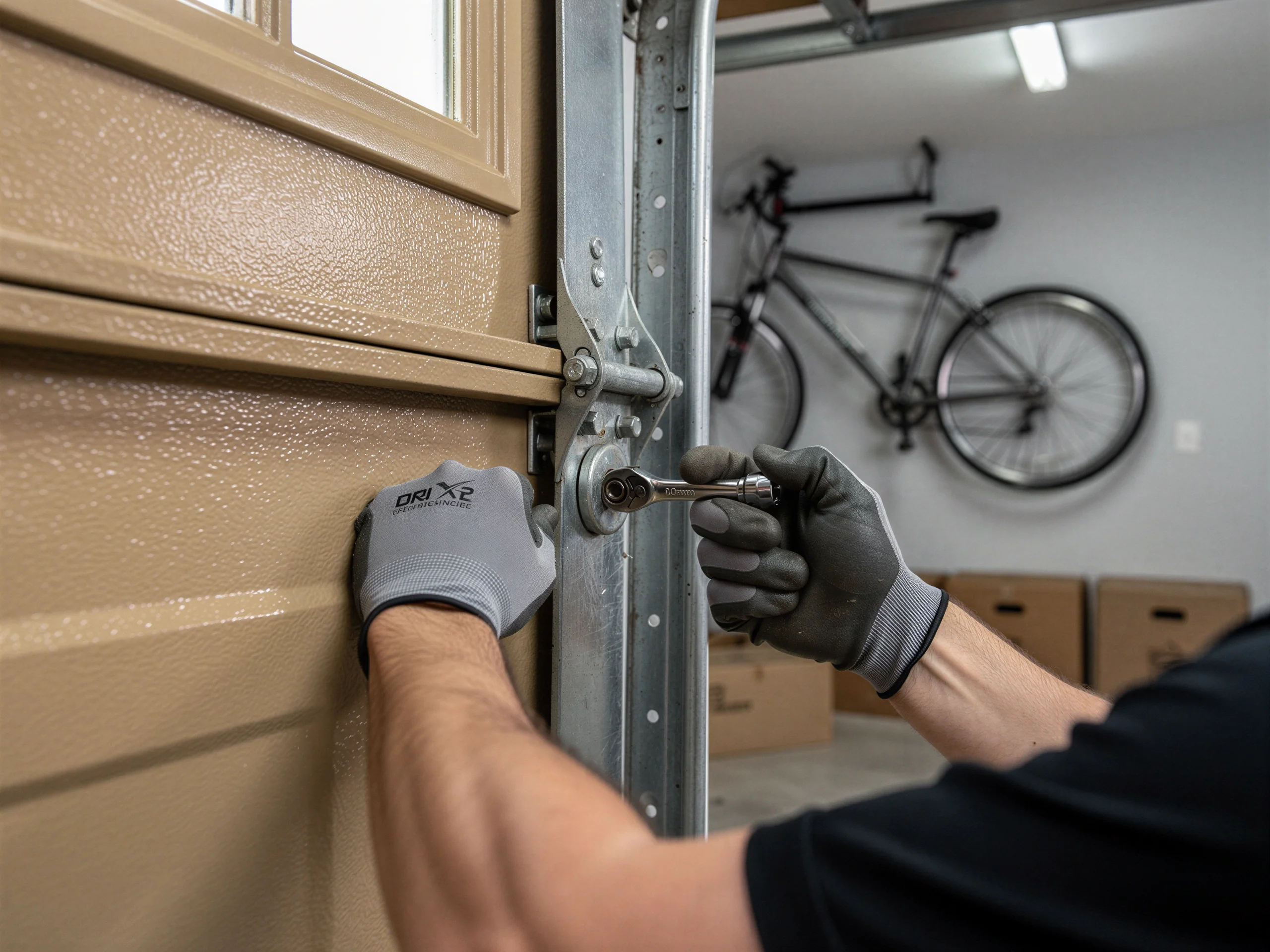
We carry torsion springs in the wire gauges and wind lengths that match that era of construction, because a spring sized for a 2020s door won't balance a door from a 1995 build - the weight and drum ratio are different enough that it matters.
Bearing plates and brackets
We also carry the end bearing plates and center brackets that tend to wear out alongside the spring on houses this age, since replacing one without checking the other is how a repair call turns into a second call two weeks later.
Cycle fatigue over weather
On a mild-climate build like this, we're not fighting frozen coils or ice-cracked springs - the wear here is almost always cycle fatigue, not weather damage, and that changes what we check first on the truck before we touch the door. We travel the 18 miles out from Boerne with pre-sized stock rather than guessing on site, because an 18-mile round trip for the wrong spring wastes everyone's afternoon.
What You Pay
What a spring job costs here comes down to two things: whether it's a single spring or a pair, and whether the drums, bearings, or cable need replacing alongside it.
Single spring failure cost
A 1995-era double door usually ran on one spring, not two, which is actually the more expensive failure when it breaks - the whole load was resting on that one spring, so it's often stretched or has taken the bearing plate with it.
No flat spring price
We don't publish a flat number here because household income and home size vary enough across these 2,442 households that quoting one price would be dishonest in either direction.
Priced after seeing door
What we can tell you is that we price the job on the door in front of us, not a phone estimate, and we'll tell you before we touch anything if the spring is the only part that's failed or if something else is riding along with it.
The Symptom
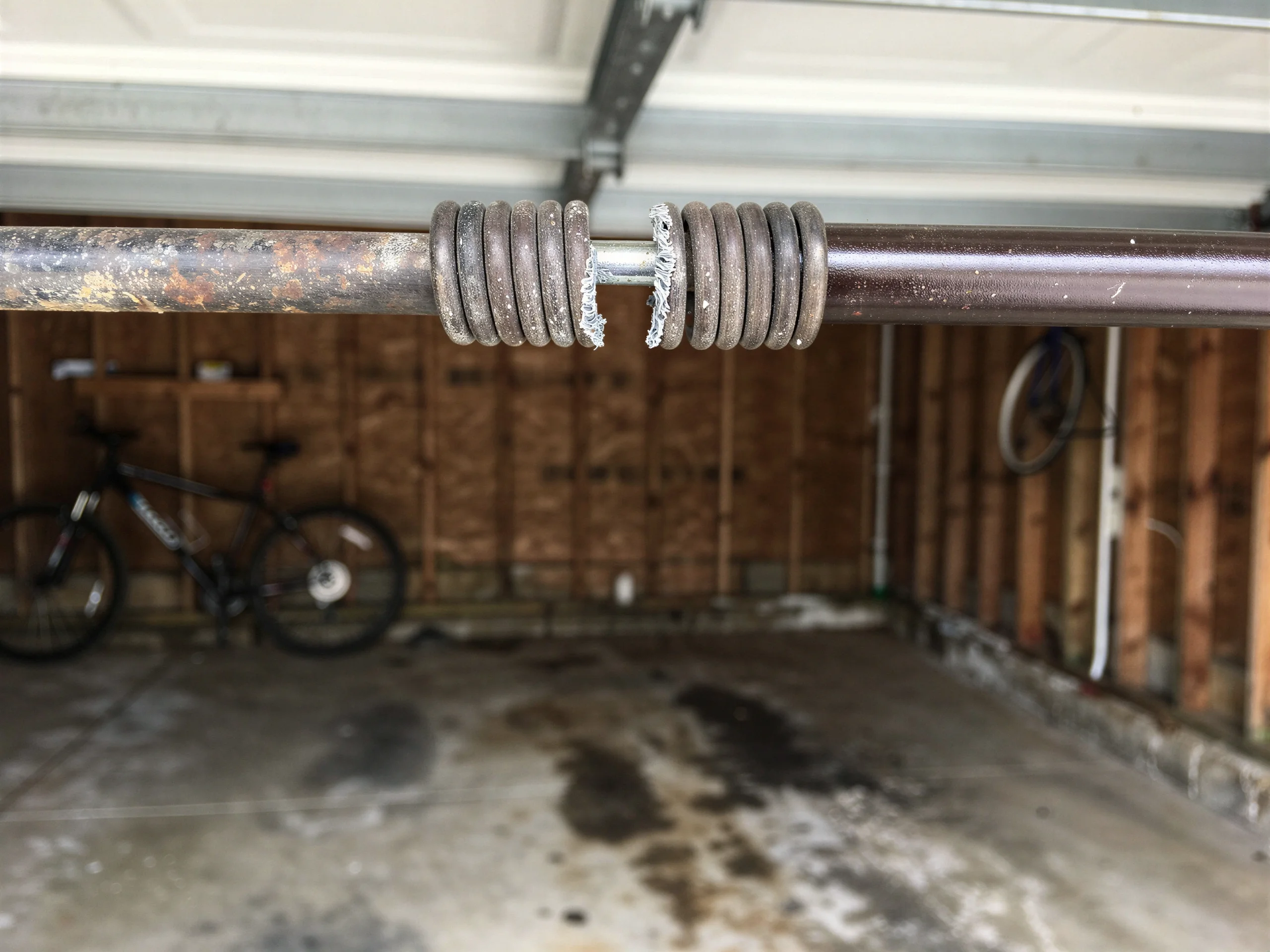
The call we get from this area almost always starts the same way: the door slammed down on its own, or it won't stay up past waist height, or there was a loud bang from the garage followed by the door refusing to open with the opener. That's a snapped torsion spring, and on a house built in 1995 it's not a surprise - torsion springs are rated for a number of open-close cycles, and a door that age has usually burned through its spring's working life already, even without any damage or neglect involved.
What's different about Bulverde's housing compared to the newer construction you'd find closer to town is that original hardware here tends to still be in place. Nobody's upgraded the spring unless it already failed once before. That means when it goes, it's often the factory-original spring reaching the end of a nearly 30-year run, not a repair gone wrong.
Doing It Yourself
A torsion spring under tension can break a hand or worse if you don't know the winding bars and the clamp sequence, and we're not going to walk you through it here. That's the honest limit on this page: there isn't a safe DIY version of torsion spring replacement, and any guide telling you otherwise is leaving out how much force is stored in that coil.
What you can check yourself before calling: whether the door is binding on the track, whether the cable has come off the drum, or whether it's actually the opener's travel limits rather than the spring at all. If the door won't budge by hand with the opener disconnected, that's a spring problem, not an opener problem, and that's the point where we'd want to see it in person rather than guess over the phone.
Talk to a local pro
Garage door service in Boerne?
Same-day service with honest, upfront quotes.