Why It Happens Here
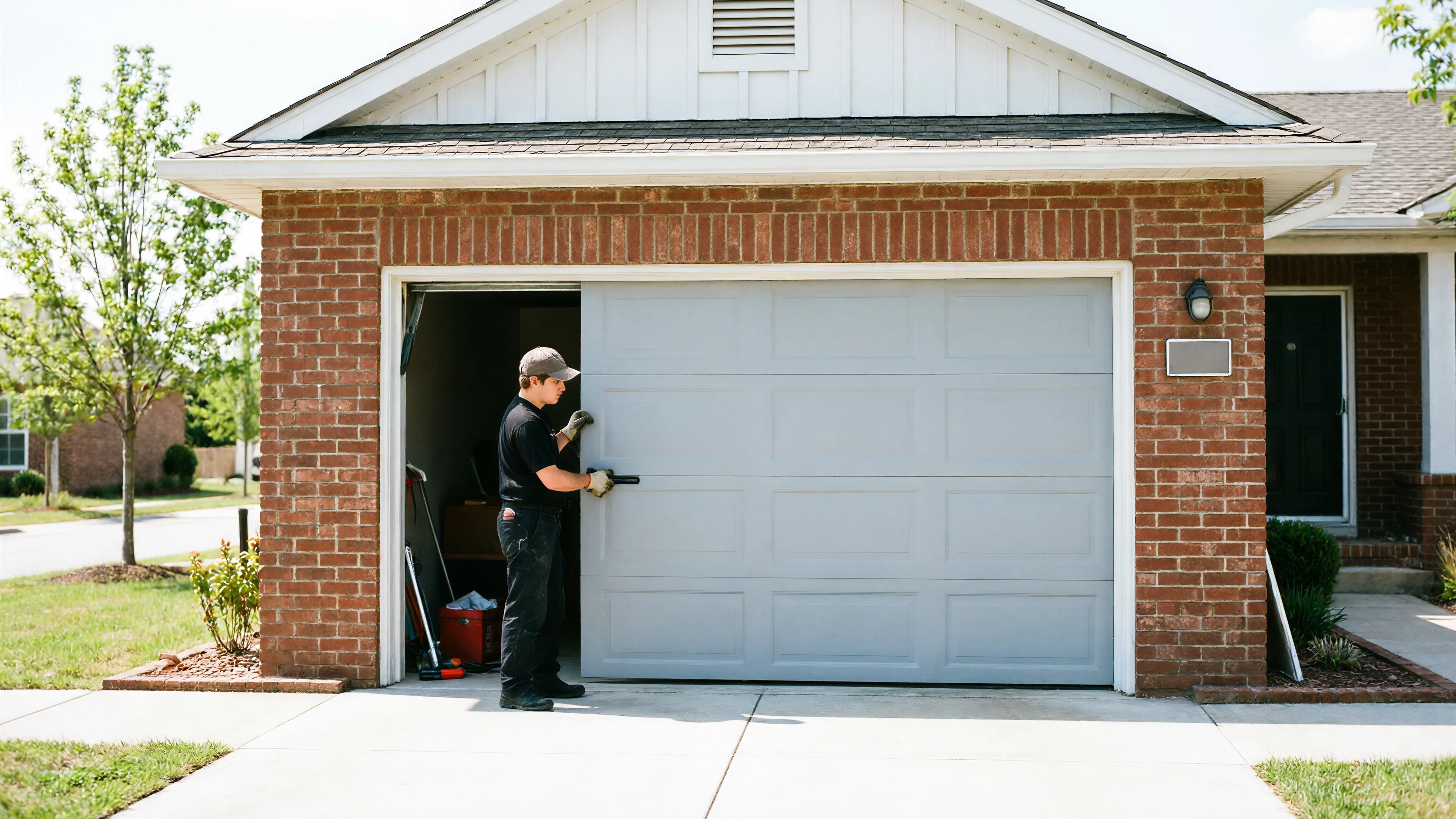
Fair Oaks Ranch mostly built out around 2001, newer than much of the wider Boerne service area, where housing stock runs from 1972 clear through 2005 and leans hardest on 1980s and 90s construction. That later build date matters for openers specifically. By 2001, photo-eye safety sensors and auto-reverse logic were already standard on anything going into a new garage, so you're not dealing with the pre-1993 units that have no safety reversal at all. What you are dealing with is a first-generation opener that's now in its twenties. Chain-drive, half-horsepower, a motor and gear set that were built to last maybe 10 to 15 years of regular cycling. The gears strip, the capacitor that gives the motor its starting torque weakens, and the logic board that runs the safety reversal starts throwing false trips or stops responding to the wall button at all. None of this is dramatic failure - it's wear that shows up as the door getting slower, louder, or less reliable about closing all the way.
What You Pay
We don't post a flat number here because what you pay depends on what's going into the garage - chain-drive versus belt, half-horsepower versus three-quarter, battery backup or not, and whether you want Wi-Fi control bolted on.
Income shapes install choices
What we can tell you is that Fair Oaks Ranch runs a median household income of $168,309, well above the $135,120 median across the broader Boerne service area, and that shows up in what people choose to install.
Belt-drive app openers
More owners here go for the quieter belt-drive units with smartphone apps than the plain chain-drive replacements that dominate older, lower-income pockets of the territory. Neither is wrong - a chain drive still opens the door - but if the garage sits under a bedroom, belt drive is worth the difference.
Rail damage billed separately
One honest limit: if your existing rail or mounting bracket is damaged or undersized for a heavier unit, that's extra work beyond the opener itself, and we'll tell you before we start, not after.
Time on the Job
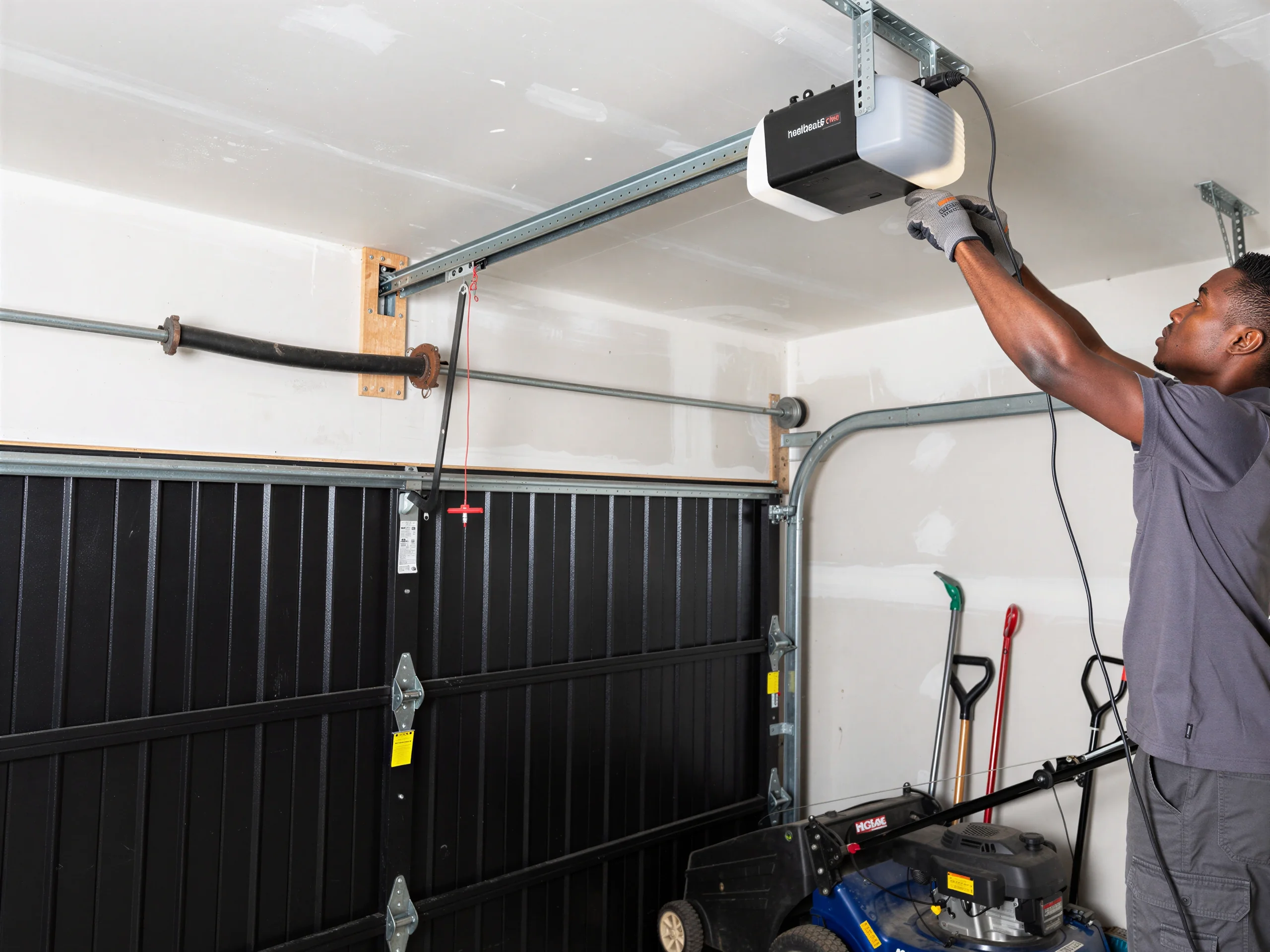
A straight swap - same mounting points, same rail length, no electrical surprises - usually runs two to three hours from pulling the old unit to running it through test cycles. Add battery backup, a keypad, or a Wi-Fi bridge and you're adding time for wiring and setup, not labor on the door itself. We travel from Boerne, six miles to Fair Oaks Ranch, so the job itself is what takes the time, not the drive. If your garage has the original 2001-era bracket work and it's still sound, we reuse it. If twenty-plus years of vibration have loosened the header bracket or cracked the mounting board, that gets fixed before the new opener goes up - skipping it just means a callback later.
The Symptom
The opener that's reached the end of its life rarely just quits outright. It tells you first. A chain that used to run quiet starts slapping against the rail. The door hesitates partway up, like the motor's working harder than it should. The remote works from the driveway but not from the street. Most tellingly, the auto-reverse - the safety feature that's been required equipment since before these houses were built - starts triggering on nothing, stopping the door a foot off the floor for no reason, or worse, stops reversing when something actually is in the way. On a milder climate with occasional freezes, a cold morning can tighten chain slack just enough to trip that reversal even on a unit that's otherwise fine, which is worth ruling out before you replace anything. But if the symptom shows up warm and cold alike, the opener itself is done.
Talk to a local pro
Garage door service in Boerne?
Same-day service with honest, upfront quotes.